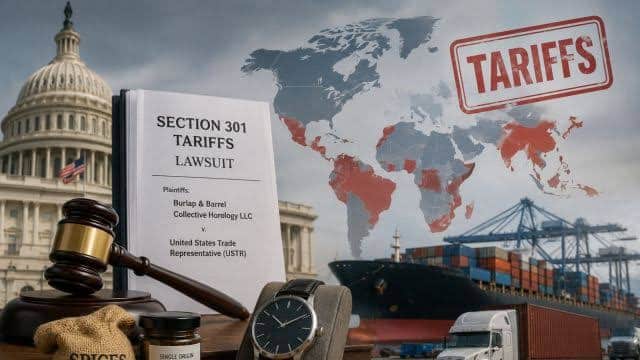
The United States is preparing to impose new tariffs on China, the European Union, and 14 other economies as early as this week as a months-long Section 301 investigation into alleged excess industrial capacity overseas wraps up, according to reports in The Wall Street Journal and Bloomberg on Wednesday, November 25, 2026.
India—one of the 16 economies named when the Office of the US Trade Representative (USTR) initiated the probe on March 11, 2026—could also be affected. While The Wall Street Journal noted that the EU, Japan, and South Korea are likely to face rates of 15% or lower under their deals with US President Donald Trump, it reported that Vietnam and India could see higher tariffs based on their trade frameworks, with China expected to face a steeper rate than most.
Section 301 Probe, India’s Position & Tariff Rates in Focus
- Replacing Struck-Down Emergency Levies: According to Bloomberg, the Trump administration is moving to replace emergency-power tariffs struck down by the US Supreme Court on February 20, 2026—a ruling that had come days after Washington and New Delhi agreed to an 18% interim tariff framework on most Indian goods (down from a 50% combined rate comprising a 26% reciprocal tariff and an August 2025 25% penalty tied to Russian oil purchases). US Trade Representative Jamieson Greer said last week he expected the probe to conclude soon, though exact tariff rates, product coverage, and effective dates remain unclear.
- India’s Rejection of USTR Allegations: In launching the probe under Section 301 of the US Trade Act of 1974—which sets no cap on tariff rates or duration—the USTR pointed to India’s $58 billion trade surplus with the US in 2025 and alleged excess capacity in solar modules, petrochemicals, and steel. India formally rejected the claims on April 15 ahead of public hearings held from May 5 to 8, while Union Commerce Minister Piyush Goyal stated on November 15 that the US had agreed to give Indian goods lower duties than competing nations as talks continue toward a durable bilateral trade pact.
Product Exclusions & Existing July Duties
The Wall Street Journal reported that the upcoming duties are likely to exclude steel, aluminium, and automobiles, which are already subject to separate national-security tariffs. However, the new levies could stack atop 10% to 12.5% duties imposed in July 2026 on roughly 60 economies—including a 10% rate on India—following a separate Section 301 forced-labour import review currently under legal challenge at the US Court of International Trade.