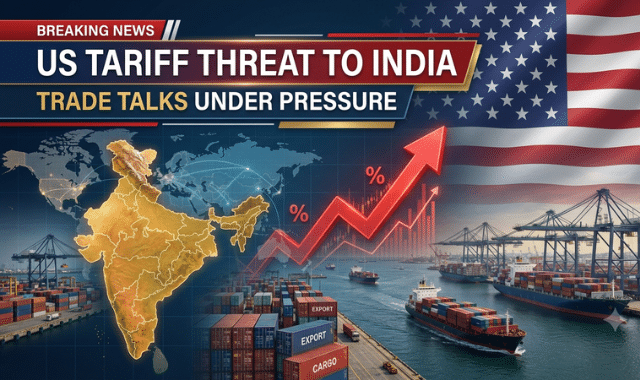
India faces the prospect of fresh tariff measures from the United States after the Trump administration signaled plans to raise duties on imports from 16 economies, including India, as part of a broader review of industrial subsidy practices.
The proposed action stems from a US investigation into government-backed industrial support programs that Washington claims provide unfair advantages to foreign manufacturers. The review is being conducted under Section 301 of the US Trade Act of 1974, a mechanism that allows the United States to impose trade penalties on countries deemed to engage in unfair trade practices.
According to reports, India is among the nations likely to face increased scrutiny as the US examines how state support and subsidies affect global competition. Other economies under review include China, Japan, South Korea, Vietnam and members of the European Union.
While the exact tariff rates have not yet been announced, reports suggest that some countries with existing trade arrangements may receive relatively lower tariff treatment. India and Vietnam, however, could face comparatively higher duties under the proposed framework.
The development comes at a sensitive juncture in India-US economic relations, with both countries continuing negotiations for a bilateral trade agreement. The uncertainty surrounding Washington’s evolving tariff policy is expected to influence the pace and direction of those discussions.
Indian officials have indicated that greater clarity on the US tariff structure and the findings of the ongoing investigation will be necessary before meaningful progress can be achieved on a comprehensive trade deal.
Industry observers warn that any increase in tariffs could impact key export sectors and add pressure to supply chains already navigating a complex global trade environment. However, trade experts also note that negotiations between New Delhi and Washington remain active, leaving room for diplomatic engagement before any final measures are implemented.
As the United States prepares to unveil its next trade policy move, businesses and exporters on both sides will be closely watching for signals that could shape the future of one of the world’s most important economic partnerships.