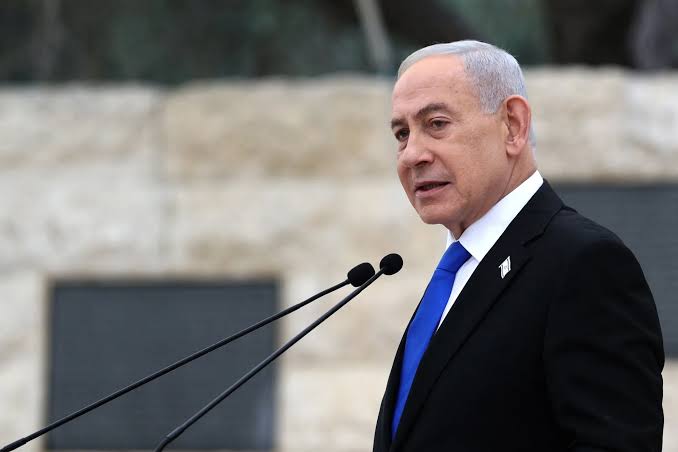
The United Arab Emirates has firmly denied claims made by Israeli Prime Minister Benjamin Netanyahu’s office about an alleged “secret visit” to Abu Dhabi during the ongoing Iran war, triggering fresh diplomatic speculation across West Asia.
The controversy erupted after Netanyahu’s office released a statement claiming the Israeli leader secretly visited the UAE and met President Sheikh Mohamed bin Zayed during “Operation Roaring Lion.” According to the statement, the meeting reportedly led to a “historic breakthrough” in UAE-Israel relations and military coordination amid rising regional tensions.
However, the UAE swiftly dismissed the claim and issued a strong clarification through its Ministry of Foreign Affairs.
In an official statement, the UAE said reports about Benjamin Netanyahu visiting the country or any Israeli military delegation being received were “entirely unfounded.” The Gulf nation also stressed that its relationship with Israel operates transparently under the Abraham Accords and not through hidden or unofficial arrangements.
The UAE further stated that any diplomatic engagement involving Israel would only be acknowledged through official announcements by relevant authorities.
The dramatic exchange comes at a highly sensitive time in the region as the Iran conflict continues to escalate. Reports suggest that the alleged meeting was linked to military coordination during the ongoing war involving Iran, Israel and US-backed operations in the Gulf region.
According to Reuters, sources familiar with the matter claimed Netanyahu and Sheikh Mohamed bin Zayed met on March 26 to discuss security concerns and regional military developments. The report gained more attention after US Ambassador to Israel Mike Huckabee reportedly revealed that Israel had deployed Iron Dome interception batteries in the UAE during the peak of the conflict.
The Iran war has significantly increased tensions across the Middle East. Since the outbreak of hostilities in February, several Gulf nations, including the UAE, have reportedly faced missile and drone attacks linked to Iran’s retaliation against US and Israeli operations.
Despite the UAE being one of the first Arab nations to normalise ties with Israel under the Abraham Accords in 2020, relations between Abu Dhabi and Tel Aviv have remained under strain in recent years. Analysts point to disagreements over the Gaza conflict and the lack of progress on a two-state solution for Palestine as major reasons behind the growing diplomatic friction.
The Abraham Accords, brokered during US President Donald Trump’s first term, established formal diplomatic and economic relations between Israel and several Arab nations, including the UAE, Bahrain, Morocco and Sudan. While the agreement reshaped regional geopolitics, the Gaza war and broader Middle East instability have complicated those ties.
Netanyahu’s office has not issued any additional clarification after the UAE’s denial. Meanwhile, the incident has sparked intense discussions online, with many questioning whether backchannel diplomacy is quietly continuing despite public tensions between the two countries.
As the Iran conflict deepens and regional alliances shift rapidly, the UAE’s rare public denial highlights the growing sensitivity surrounding Israel’s diplomatic and military engagements in the Gulf.