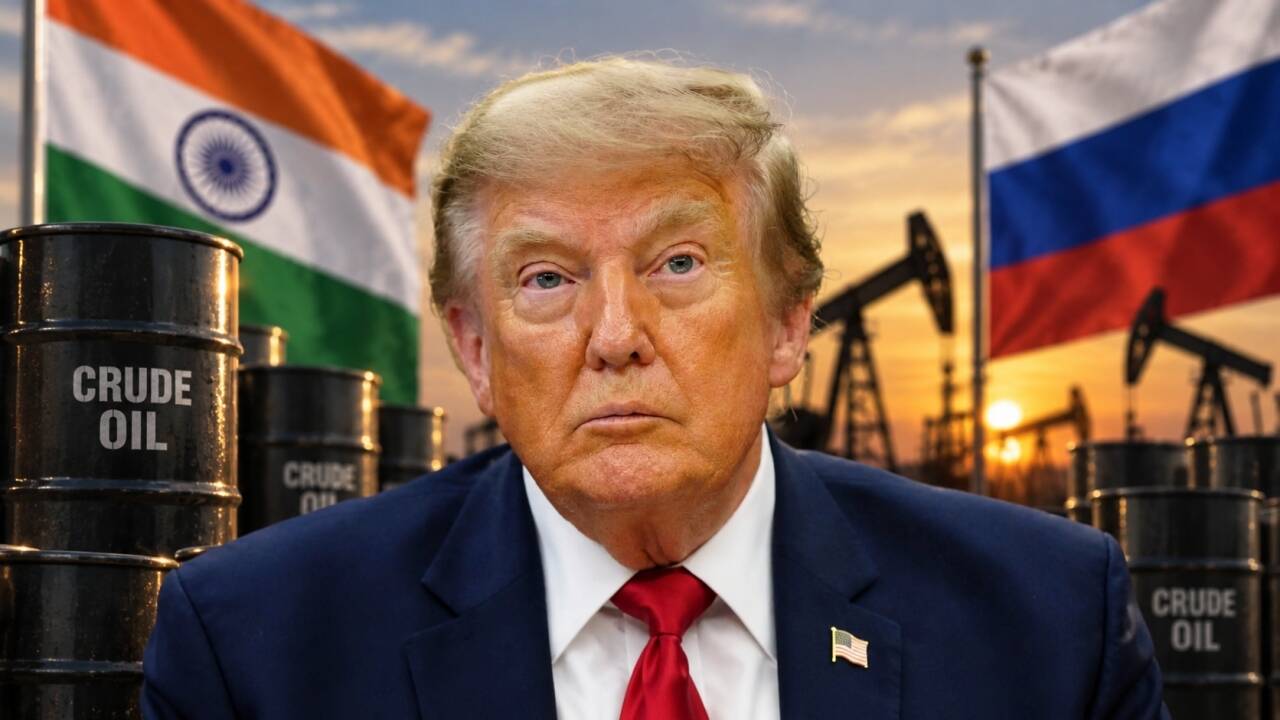
United States President Donald Trump has formally waived the application of specific “sanctions, restrictions, and duties” tied to Russian energy exports under the recently enacted Lindsey O. Graham Sanctioning Russia and Iran Act of 2026, citing the “national interest” of the United States.
The executive directive temporarily suspends the implementation of potential tariffs of up to 100% that threatened top purchasers of Russian oil and gas, including major economies like India and China.
Background on the Graham Act and Discretionary Tariffs
The legislation, signed into law by Trump in September, was championed to pressure Moscow over its military actions in Ukraine by penalizing major importers of Russian crude and natural gas. While the law granted the executive branch discretionary authority to impose steep secondary tariffs of up to 100% on the top five purchasing nations, it also included an explicit national interest waiver clause.
By invoking this clause, President Trump submitted a formal certification to Congress, halting the immediate enforcement of the penalties. However, analysts note that the waiver suspends rather than permanently cancels the tariffs, leaving open the possibility of future implementation depending on geopolitical developments.
Balancing Energy Markets and Global Diplomacy
The decision follows closely on the heels of other unpredictable maneuvers in US energy diplomacy, including a recent arrangement enabling the US to source diesel supplies originating from Russia to ease domestic fuel pricing pressures.
While the waiver provides immediate relief to key trading partners like India and China—which remain significant buyers of global crude—the evolving framework of the Graham Act underscores Washington’s ongoing efforts to restrict Russian energy revenues without causing catastrophic shocks to global commodity markets.