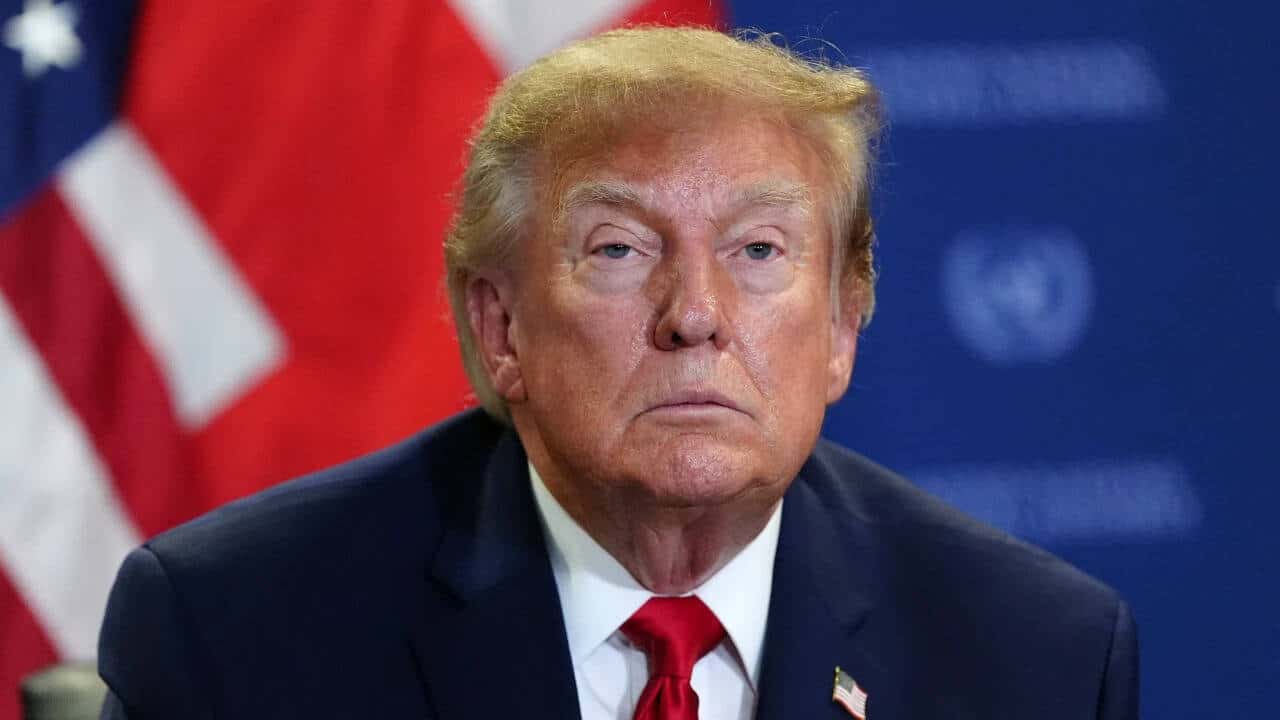
US President Donald Trump has backed the India-Middle East-Europe Economic Corridor (IMEC) as part of a broader effort to shift Middle East energy infrastructure away from routes vulnerable to disruption linked to Iran.
Speaking during a multilateral meeting with Gulf Cooperation Council countries on the sidelines of the United Nations General Assembly, Trump said recent attacks on commercial shipping had highlighted the need to develop alternative energy routes.
Trump said his administration strongly supported IMEC as well as other options for moving oil, including pipelines and other infrastructure.
Trump Links IMEC to Energy Security
Trump’s remarks came amid continued tensions involving the US and Iran and disruptions around the Strait of Hormuz, a major global route for oil and other energy shipments.
The US president argued that developing alternative infrastructure could reduce dependence on routes vulnerable to geopolitical disruption.
His comments give renewed attention to IMEC, a connectivity project involving India, the Gulf and Europe.
What Is IMEC?
The India-Middle East-Europe Economic Corridor was formally announced in September 2023 during the G20 Summit in New Delhi.
The participating governments — India, Saudi Arabia, the United Arab Emirates, the European Union, France, Germany, Italy and the United States — signed a memorandum of understanding to work towards establishing the corridor.
The proposed project has two main corridors: an eastern route connecting India with the Arabian Gulf and a northern route linking the Gulf with Europe.
The plans envisage railway and shipping links, along with electricity and digital connectivity cables and a pipeline for clean hydrogen exports.
IMEC and the Strait of Hormuz
The renewed focus on IMEC comes as shipping through the Strait of Hormuz has been severely disrupted amid the ongoing conflict involving the US and Iran.
Reuters reported that only two commodity vessels crossed the strait on September 21, compared with a pre-conflict average of about 125 large commercial ships a day.
Iran has separately indicated that it could reopen the Strait of Hormuz if the US reduces military pressure and lifts its blockade on Iranian ports, according to Reuters.
The developments have increased attention on alternative routes for transporting energy and goods between the Gulf and global markets.
IMEC’s Current Status
Despite renewed political support, IMEC remains a long-term infrastructure project rather than an operational alternative to the Strait of Hormuz.
The 2023 memorandum set out an intention to develop the corridor and its associated infrastructure, including rail, shipping, energy and digital links.
The project’s progress has also been affected by geopolitical tensions and regional security concerns.
Trump’s latest comments therefore represent renewed political backing for the corridor at a time when disruptions to existing Middle East energy routes have increased the focus on alternative connectivity.
Trump Again Warns Iran
Alongside his comments on IMEC, Trump repeated a warning directed at Iran, saying Tehran needed to act before it was too late.
He also claimed that the US military’s previous operation had destroyed Iran’s nuclear programme, a claim that remains part of Trump’s stated position on the conflict.
Trump’s comments came as diplomatic efforts involving Washington and Tehran continued. Reuters reported that Iran had indicated a willingness to reopen the Strait of Hormuz under certain conditions, while Trump has maintained pressure on Tehran.