
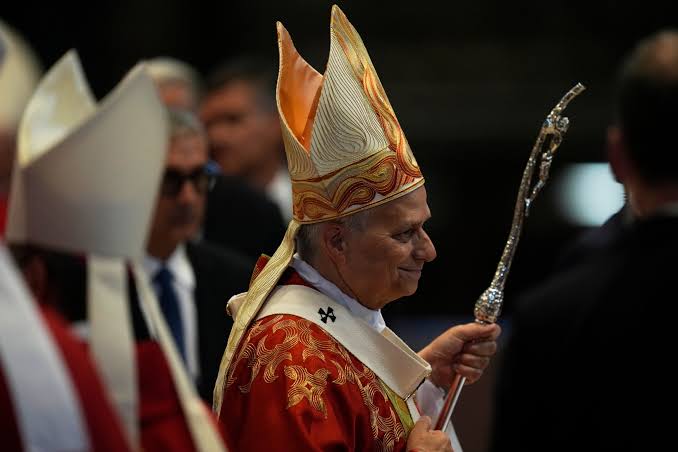
The Vatican has formally excommunicated members of the Society of St. Pius X (SSPX) after the traditionalist Catholic group consecrated four bishops without the approval of Pope Leo XIV, triggering one of the Church’s most serious disciplinary actions in decades.
The decision follows repeated warnings from the Vatican that the consecrations would violate Church law and undermine papal authority. By proceeding with the ceremony, the SSPX prompted the Holy See to declare the group in schism and impose excommunication on those directly involved.
Why Did the Vatican Excommunicate SSPX?
The dispute centers on the consecration of four new bishops at the SSPX seminary in Écône, Switzerland, on July 1.
In the Catholic Church, only the Pope has the authority to approve the appointment of bishops. Consecrating bishops without papal approval is regarded as a direct challenge to the Pope’s authority and the unity of the Church.
Despite appeals from Pope Leo XIV to cancel the ceremony, the SSPX proceeded with the consecrations, arguing that the move was necessary to preserve its leadership and traditional Catholic teachings.
The Vatican responded by declaring the group in schism and imposing excommunication.
What Is the Society of St. Pius X?
The Society of St. Pius X (SSPX) was founded in 1970 by French Archbishop Marcel Lefebvre.
The organization opposes several reforms introduced during the Second Vatican Council (1962–1965), commonly known as Vatican II.
Among the reforms the group has opposed are:
- Celebrating Mass in local languages instead of exclusively in Latin.
- Greater participation of lay Catholics in Church life.
- Increased dialogue with other Christian denominations and religions.
The SSPX maintains that these reforms departed from long-standing Catholic traditions.
Today, the organization operates churches, seminaries and religious communities across numerous countries and serves a global community of traditionalist Catholics.
What Does Excommunication Mean?
Excommunication is the most severe disciplinary penalty under Catholic canon law.
A person who is excommunicated:
- Cannot fully participate in the sacramental life of the Church.
- Is barred from exercising official Church ministries.
- Cannot lawfully celebrate sacraments such as marriages and confessions.
- May be restored to full communion if they reconcile with the Church.
The Vatican clarified that Catholics who formally support SSPX’s doctrinal positions or regularly participate in its religious activities are affected by the decision.
SSPX Defends Its Decision
The SSPX insists that the consecration of new bishops was intended to preserve traditional Catholic teaching rather than challenge the Pope.
During the ceremony, SSPX Superior General Father Davide Pagliarani said the group was prepared to accept any consequences in what it believes is service to the Church.
The organization has also rejected accusations that it opposes the papacy, arguing that its actions were motivated by a desire to protect Catholic tradition.
A Dispute With Historical Roots
The latest confrontation closely mirrors events from 1988, when Archbishop Marcel Lefebvre consecrated four bishops without the approval of Pope John Paul II.
That decision also resulted in excommunications and the Vatican declaring the act schismatic.
In 2009, Pope Benedict XVI lifted the excommunications of the surviving bishops in an effort to improve relations. Later, Pope Francis granted SSPX priests limited faculties to hear confessions and, in certain cases, officiate marriages.
That decision also resulted in excommunications and the Vatican declaring the act schismatic.
In 2009, Pope Benedict XVI lifted the excommunications of the surviving bishops in an effort to improve relations. Later, Pope Francis granted SSPX priests limited faculties to hear confessions and, in certain cases, officiate marriages.
Following the latest consecrations, the Vatican has withdrawn those permissions.
What Happens Next?
The Vatican has stated that reconciliation remains possible if SSPX members return to full communion with the Catholic Church and accept papal authority.
However, the latest developments represent one of the most significant rifts between the Vatican and the traditionalist movement in recent years, highlighting continuing disagreements over Church authority, doctrine and the legacy of Vatican II.