
A central question for Indian democracy is whether political leadership can still create room for expertise at the top of the state. India’s history contains important episodes in which powerful prime ministers backed professionals who then delivered transformative outcomes.
Yet the broader record calls for a more sceptical view. The central tension in Indian democracy is not simply between loyalty and competence. It is that competence is rarely recognised in its own right; it is first filtered through political loyalty, social acceptability and personal deference. Competence does not necessarily displace loyalty. More often, loyalty authorises what counts as competence.
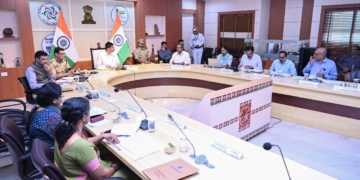
A recent statement by Odisha’s Deputy Chief Minister, K V Singh Deo, brings this question into the everyday reality of state governance. Addressing officials at meeting, he was reported as saying: “The Minister is the Government, the Director is not the Government.” The political executive is, of course, entitled and constitutionally required to set policy priorities and remain accountable to the elected legislature and the public. But the formulation becomes troubling when it is understood to mean that officers do not run any part of government, or that their professional judgement is somehow external to governance. That is not democratic accountability; it is an impoverished understanding of how the state works.
The hierarchy that actually operates
India has repeatedly benefited when political executives insulated domain experts and allowed them to work. From Homi Bhabha and M S Swaminathan to Sam Pitroda, Manmohan Singh, Nandan Nilekani and the extension of India Stack, the pattern points to a real feature of state-building: political authority matters because institutions often need elite sponsorship to overcome inertia.
But these examples can also be read differently. They do not prove that competence routinely triumphs over loyalty in the Indian system. They show that competence is occasionally admitted when it does not threaten the political sovereign and can be safely absorbed into an existing architecture of power. The exception should not be mistaken for the rule.
The deeper pattern is harsher. Governments can be formed by flatterers, populated by flatterers and sustained by flatterers. Those who rise are not always the most capable independent minds, but those who know how to signal submission, anticipate preferences and convert political proximity into administrative legitimacy. The result is not the absence of skill altogether. It is the subordination of skill to obedience.
Ministers and officers: a false opposition
The statement attributed to Shri Singh Deo is especially revealing because it creates a false opposition between ministers and officers. In a constitutional democracy, the political executive and the permanent executive perform different, but interdependent, functions. Ministers derive democratic legitimacy from elections: they articulate political priorities, take responsibility for policy and answer to the legislature. Civil servants bring continuity, technical knowledge, institutional memory and the capacity to translate decisions into programmes, rules and public services.
The state does not function because one side acts alone. A minister may announce a policy, approve a budgetary direction or demand results. But officers prepare the evidence, draft the rules, examine legality and feasibility, coordinate departments, manage public expenditure, supervise implementation and report what is happening on the ground. They are not elected representatives, and therefore cannot substitute their preferences for those of the elected government. Yet neither are they clerks without judgement. Their professional role includes giving frank advice and implementing lawful decisions impartially.
India’s administrative system is built around this relationship. The design is not a contest over who alone “runs” government. It is a system of political direction, administrative expertise and public accountability working together.
Why competence remains conditional
India now faces economic, technological, educational and institutional problems that electoral success alone cannot solve. That diagnosis is persuasive. Yet it does not follow that the system will automatically pivot towards competence.
In fact, the opposite may be more plausible. As governance becomes more centralised and reputational risk at the top is more tightly managed, the demand for trusted loyalists may increase rather than weaken. Expertise will continue to be welcomed, but only after it passes a political test: is the expert safe, deferential and willing to operate within the emotional and ideological grammar of the regime?
This is why optimism should be restrained. The future may not produce a clean contest in which competence finally wins the upper hand. It may instead produce a tighter fusion between loyalty and officially recognised competence. Those deemed loyal will increasingly be described as competent; those judged insufficiently loyal will be treated as dispensable, suspect or politically unusable, regardless of their substantive ability.
The rhetoric that ministers alone run the government can intensify precisely this tendency. It invites officers to understand their role not as professional trustees of public institutions, but as subordinate instruments whose value lies in unquestioning compliance. It also encourages ministers to confuse accountability with ownership. A government belongs neither to a minister nor to a cadre of officials. It is a constitutional institution held in trust for citizens.
The direction of causality
The central issue is not whether loyalty and competence can coexist; of course they can. It is the direction of causality in elite recruitment.
In an ideal administrative order, competence earns authority, and loyalty to constitutional purpose follows from competent service. In India’s actual political order, the sequence often runs the other way. Loyalty comes first; competence is recognised later, and often only within boundaries set by loyalty. The loyal person’s competence is valued, amplified and institutionally rewarded. The politically inconvenient competent person rarely receives the same accommodation.
When competence is conditional on deference, expertise loses its autonomy. Advisers stop asking what is true, workable or institutionally durable, and begin by asking what is permissible. Bureaucratic intelligence is then redirected away from problem-solving and towards political calibration.
The irony is that a minister who publicly diminishes officers also weakens the machinery on which ministerial success depends. Roads, irrigation systems, hospitals, schools, welfare programmes and digital platforms do not become functional merely because a political decision has been announced. They require thousands of professional decisions, many of them invisible, technical and painstaking. To deny that contribution is not to strengthen political leadership; it is to make administration less candid and less capable.
The democratic cost
Institutional erosion arrives gradually through currency weakness, talent flight, educational breakdown, delayed technological capacity and the steady thinning out of serious public reasoning.
There is another democratic cost. When flatterers dominate the route to power, mediocrity becomes normalised and candour becomes dangerous. Institutions cease to reward disagreement offered in good faith. The state then becomes less capable not merely because it lacks experts, but because it lacks the political confidence to hear experts who may not flatter it.
Appeals for more professionals at the top, while attractive, may not by themselves alter the governing logic. Degrees do not neutralise patronage. Professional titles do not guarantee institutional independence. A technocrat who survives by pleasing power may still deepen the culture of conformity that blocks serious state capacity. Conversely, a career officer who offers inconvenient advice is not necessarily obstructing the government; he or she may be protecting it from an avoidable mistake.
A more realistic reading
India unquestionably has a deep reservoir of talent. The country has never been short of capable people. The difficulty lies elsewhere: access to power is filtered through loyalty before competence is allowed to matter. The status quo is therefore unlikely merely to persist; it may return with greater force and greater self-confidence.
The coming years may produce not a correction in favour of competence, but a more buoyant version of the existing order—one in which loyalty and competence are more tightly bundled, and where public recognition of merit is increasingly conferred by political approval. Odisha should be especially alert to this danger. The state needs ministers who exercise democratic authority and officers who apply expertise with integrity. It needs neither an unaccountable bureaucracy nor a political culture that treats administrative professionalism as insolence.
The proper principle is simple: ministers decide and answer for policy; officers advise, administer and implement lawfully, while remaining accountable within the constitutional chain of command. Neither side is sovereign. Both serve the public.
The challenge before Indian democracy is not simply to find experts. It is to build a culture in which expertise can exist without first bowing to flattery and in which political authority is strong enough to hear professional advice without pretending that it alone makes government work.
✍️ About the Author
Arijit is a PhD researcher in Development Economics at the University of Cambridge, supported by the Nehru Trust and the Malaysian Commonwealth Studies Centre. His work integrates econometrics, public policy, and local economic development. He holds Economics degrees from Queen Mary University of London and the London School of Economics, where his dissertation on spatial inequality and infrastructure earned a Distinction. Arijit has worked with NITI Aayog, the Indian Institute of Public Administration, and Social Investment Business (UK), leading quantitative evaluations of major public and impact-investment programs.
📧 Contact: ad2375@cam.ac.uk
⚖️ Disclaimer
The views and opinions expressed in this article are solely those of the author and do not necessarily reflect the editorial stance of Pragativadi.com. Pragativadi remains committed to providing a platform for diverse perspectives while upholding its editorial independence and integrity.