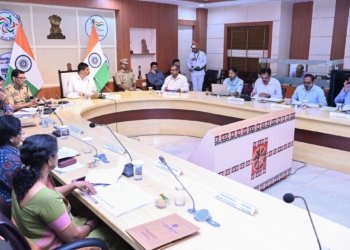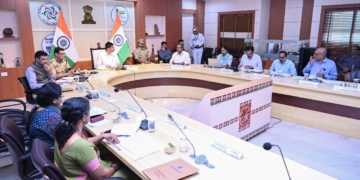
In a significant step toward strengthening technical education and skill development in Odisha’s tribal-dominated Koraput district, Minister for Industry, Skill Development and Technical Education, Sampad Chandra Swain, on Saturday laid the foundation stone for two new hostels at the Government Polytechnic campus in Jaypur Ambaguda.
The ceremony marked the beginning of construction for a 200-bed boys’ hostel and a 100-bed girls’ hostel, designed to provide secure and comfortable residential facilities for hundreds of students. Estimated costs stand at ₹9.17 crore for the boys’ hostel and ₹6.65 crore for the girls’ hostel. Once completed, these facilities will offer a supportive living environment that enables students to focus fully on their studies and skill-building.
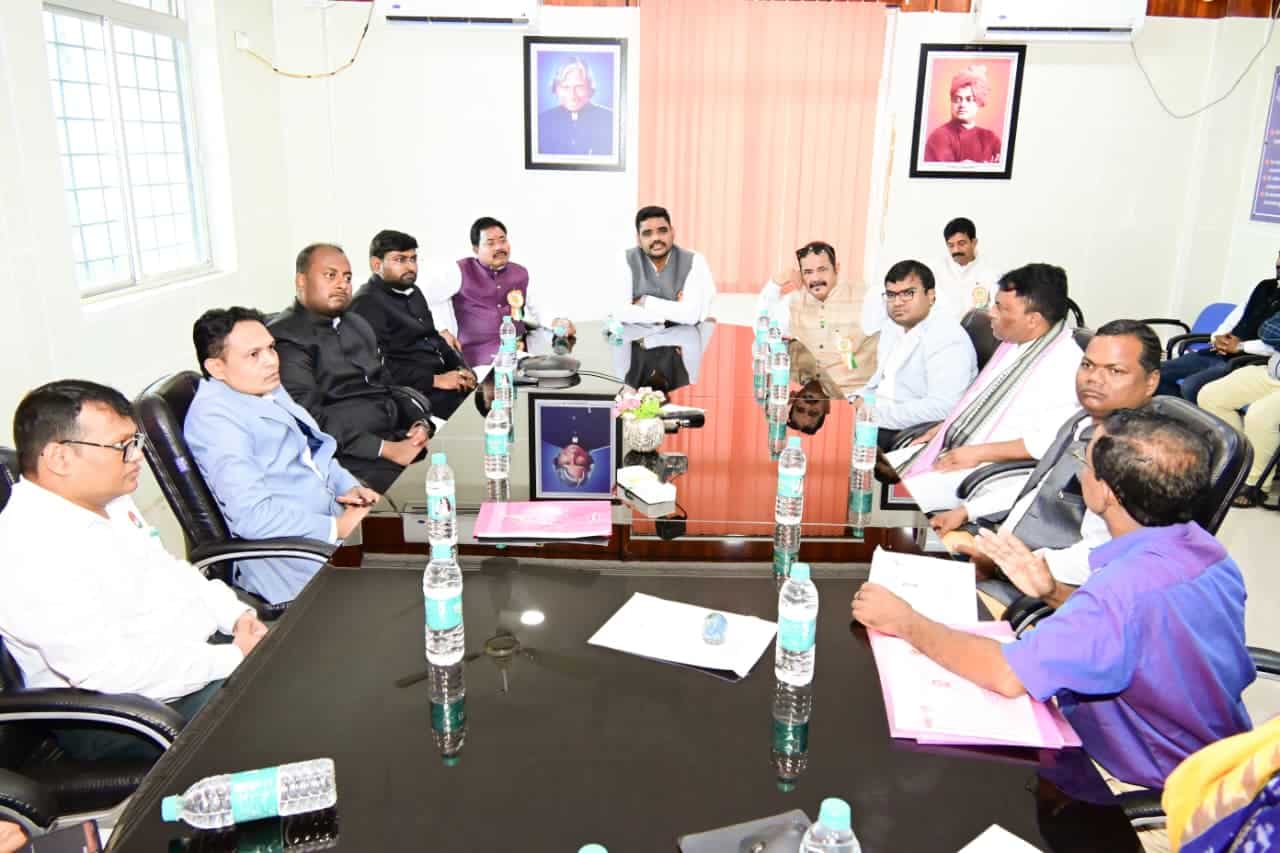
Jayapur MLA Taraprasad Bahinipati and Koraput MLA Raghuram Machha joined the Minister as special guests. During the visit, Minister Swain reviewed the institute’s teaching systems, progress, and basic infrastructure with the principal and faculty, emphasising the need for continuous improvement.
Adding further momentum, two important Memoranda of Understanding (MoUs) were signed on the occasion. The partnerships are with Sky Skill Academy Private Limited, Hyderabad, and Tech Communication Computer Academy Private Limited, Bhubaneswar.
Under the first MoU, Sky Skill Academy will offer specialised training in electric vehicle (EV) and battery technology, industrial training, curriculum development, and short-term technical courses. The second MoU with Tech Communication Computer Academy will focus on practical training in artificial intelligence (AI), robotics, Industry 4.0, digital technologies, and IT-enabled services.
These collaborations aim to bridge the gap between classroom learning and industry requirements. Students will gain hands-on experience, industrial exposure, and knowledge of emerging technologies—directly enhancing their employability and career prospects.
In a district like Koraput, where access to modern technical education has long been a priority, these initiatives carry special weight. By combining improved residential infrastructure with industry-aligned skill programmes, the government is creating a stronger pathway for local youth to enter the workforce with relevant, future-ready competencies.
The dual focus on infrastructure and industry partnerships signals a clear commitment: technical education in Koraput is moving beyond traditional classrooms into a dynamic ecosystem of opportunity, innovation, and real-world readiness.