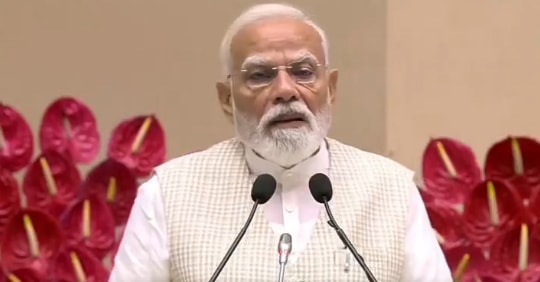
Prime Minister Narendra Modi declared that India is taking a historic step toward women’s empowerment as Parliament began its special session on April 16.
He stressed that respect for mothers and sisters reflects respect for the nation, underlining the importance of women’s participation in governance.
The session, scheduled from April 16 to 18, focuses on fast-tracking the women’s reservation law. The proposal includes expanding the Lok Sabha from 543 seats to as many as 850, ensuring one-third reservation for women. Sources indicated that up to 815 seats could go to states and 35 to Union Territories, with final allocations determined by a Delimitation Commission. The commission will also decide which seats will be reserved for women.
Officials confirmed that the changes will likely take effect from the 2029 Lok Sabha elections. Seat distribution will follow proportional representation, using the 2011 Census as the reference point. Analysts noted that southern states may gain an advantage due to lower population growth compared to northern states.
PM Modi emphasised that the government remains determined to strengthen women’s role in governance. His remarks framed the bill as a landmark move that aligns national respect with empowerment.
The women’s reservation bill represents a significant shift in India’s political landscape, aiming to increase female representation and ensure broader participation in decision-making. With implementation expected in 2029, the measure could reshape parliamentary dynamics and highlight India’s commitment to gender equality.