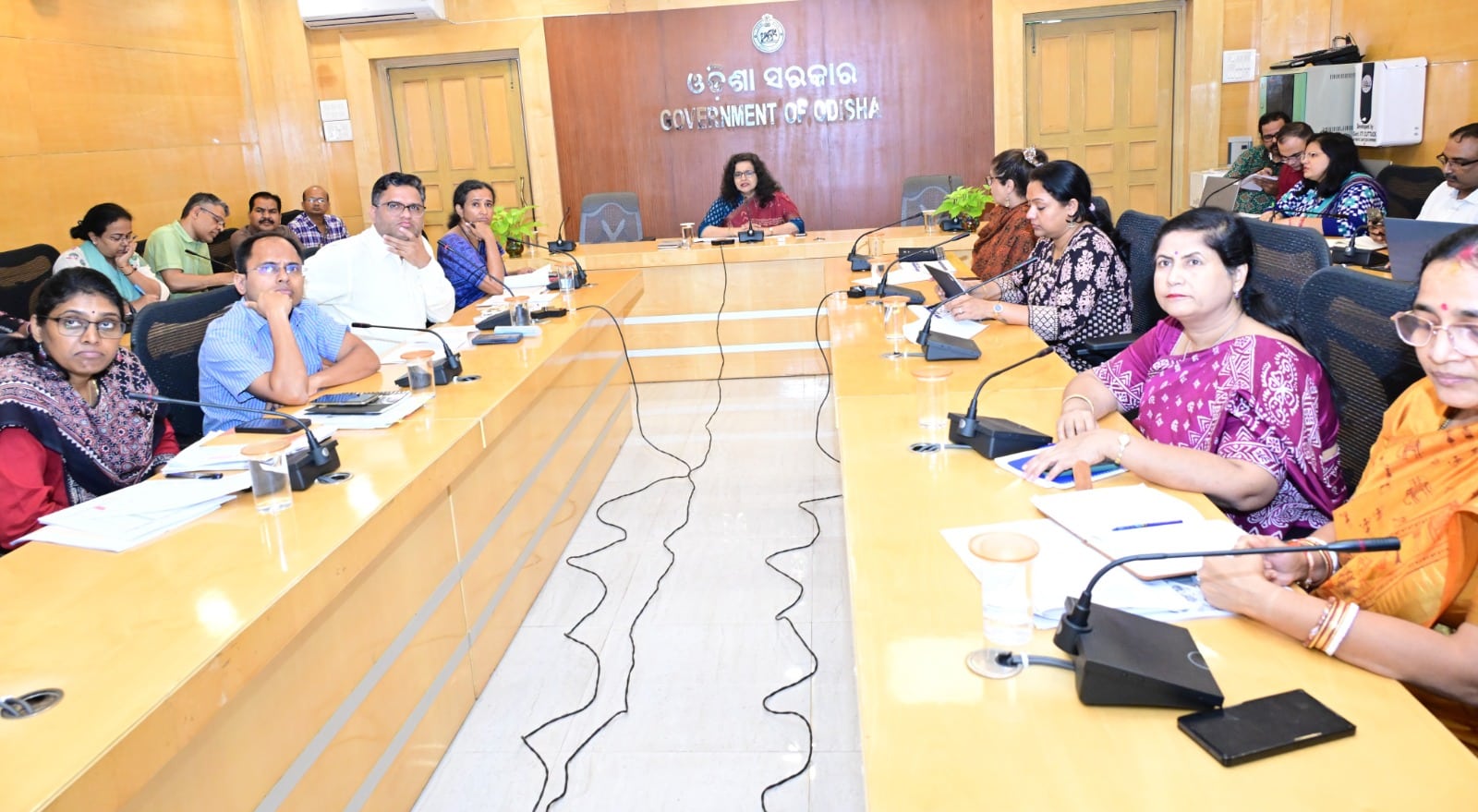
Chief Secretary Anu Garg today reviewed key social-sector indicators and asked departments to strengthen data-based monitoring, inter-departmental coordination and timely follow-up at the district level.
The ‘Prayas’ meeting at Lok Seva Bhawan covered School and Mass Education, Health and Family Welfare, and Women and Child Development. Secretaries, directors and senior officials attended in person, while Revenue Divisional Commissioners and Collectors joined virtually.
Garg stressed that services in education, nutrition, maternal and child health, and tuberculosis control must become more result-oriented and people-centric. She asked districts to study local data, identify gaps quickly and act within fixed timelines.
Nutrition: Quality Matters as Much as Quantity
The Women and Child Development review focused on making child and maternal nutrition more effective. Officials were told to look beyond food quantity and ensure a better mix of proteins, fats and micronutrients at the household level.
The meeting highlighted nutrition gardens, kitchen gardens, fruit cultivation, seedling distribution and Self-Help Groups as ways to improve access to fresh vegetables. Regular tracking at Anganwadi centres, growth monitoring of children, home visits, distribution of supplementary nutrition and skill-building of Anganwadi workers will be tightened.
Education: Focus on Foundational Literacy and Numeracy
In school education, the discussion centred on Foundational Literacy and Numeracy (FLN) at the primary stage. The department was advised to strengthen classroom monitoring, use of teaching-learning materials and regular assessment of learning outcomes.
Health: Newborn Survival and Infection Control
The Health and Family Welfare review laid special emphasis on reducing maternal and neonatal deaths, improving newborn care, and tightening infection prevention and control.
The Health Secretary said neonatal mortality in the state declined between January and July 2026. Two success stories were cited: a 500-gram baby treated for 78 days at Nabarangpur District Headquarters Hospital went home weighing 1.6 kg, and a 900-gram premature baby at Baripada DHH was discharged after successful care.
Hospitals will continue to be checked on hand hygiene, cleanliness, biomedical waste management and use of protective equipment. Staff retraining and regular audits will follow.
From September 1, a large-scale X-ray screening drive will begin under the 100-day campaign of the TB Mukt Bharat Abhiyan. Collectors have been asked to maximise use of available X-ray machines, organise camps in remote areas, track daily screening and reporting, put household contacts on preventive treatment where needed, cover other high-risk groups, and ensure prompt nutrition support for eligible TB patients.
District Examples
Anugola Collector reported that better clinical care, preparedness for deliveries, practical changes in hospitals and close supervision have helped bring down maternal deaths. Rayagada Collector said widespread anaemia screening in schools and regular iron-folic acid tablets have improved students’ health.
All 30 districts will now hold regular, data-based departmental meetings ahead of the next ‘Prayas’ review. Fixed-day check-ups for pregnant women, identification and follow-up of high-risk pregnancies, and continuous monitoring of infection control in health facilities have been listed as priorities.
The meeting closed with a clear message: social-sector services will improve only when data, coordination, field-level accountability and time-bound problem-solving work together.