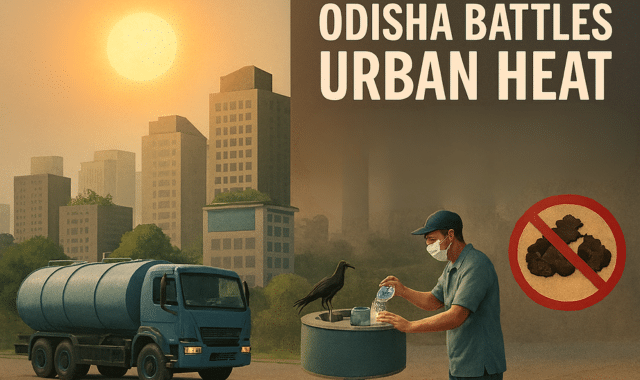
The Housing & Urban Development (H&UD) Department of Odisha has issued a comprehensive Standard Operating Procedure (SOP) for all Urban Local Bodies (ULBs) to combat the escalating heatwave conditions across urban areas.
The directive comes amid abnormally rising summer temperatures, exacerbated by erratic rainfall patterns and urban heat island effects from extensive building and road surfaces absorbing solar heat.
The SOP mandates immediate and proactive measures to ensure public health, water security, and environmental management in cities and towns.
Key directives include:
- Ensuring uninterrupted drinking water supply through well-maintained pipelines, with complaints resolved within 24 hours.
- Deploying water tankers (including hired ones if needed) to scarcity pockets for emergency relief.
- Keeping tube wells and hand pumps fully operational with ready spare parts.
- Establishing and managing control rooms in PHEO/WATCO and city offices to handle water-related grievances, while monitoring IMD heatwave warnings and coordinating with IMD/State EOC as required.
ULBs are instructed to expand the number of Paniya Jal Bitaran Kendra (drinking water kiosks) at strategic public locations such as roadsides, crossroads, bus stands, railway stations, marketplaces, and offices.
These should be operated through Mission Shakti SHGs, federations, or NGOs, ensuring potable water quality, daily water changes, proper sanitation, and use of long-handle dispensers. Agencies setting up kiosks only for publicity and abandoning them later will face strict action.
Additional measures focus on pollution and dust control:
- Strict prohibition on open burning of municipal solid waste, garden/tree residues.
- Awareness campaigns encouraging households to place and regularly change water pots for stray birds and animals.
- Prompt clearance of construction and demolition (C&D) waste from roadsides.
- Mandating construction sites and households to cover areas, sprinkle water to suppress dust, and dispose of materials safely—non-compliance will attract penalties.
- Requiring vehicles carrying sand, bricks, cement, or garbage to be fully covered with tarpaulin and adhere to speed limits.
- Maintaining roadside earthen layers below metal road levels to prevent dust spillover.
- Banning the use of coal or coal briquettes in urban roadside hotels and eateries to curb fly ash dust pollution contributing to the temperature rise.
The SOP also calls for rejuvenation and pollution-free restoration of urban water bodies to enhance public access and cooling effects. All relevant Environmental Acts, Rules, and National Green Tribunal (NGT) guidelines must be enforced rigorously, with coordination from police, forest, Odisha Pollution Control Board (OPCB), and other authorities.
This proactive step aims to mitigate urban heat stress, prevent heat-related illnesses, and build resilience in Odisha’s cities amid forecasts of intensified summer conditions.