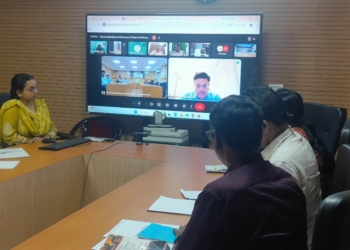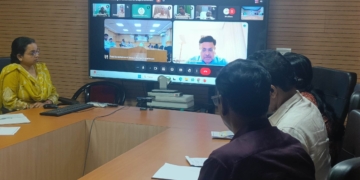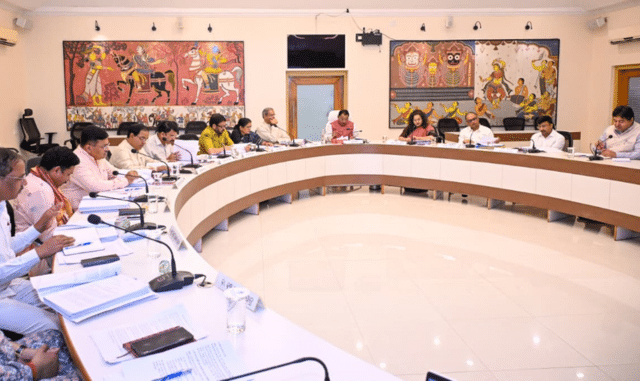
In a landmark decision that promises to rewrite the economic story of Odisha’s tribal heartland, the 45th meeting of the Odisha Cabinet, chaired by Chief Minister Mohan Charan Majhi at Lok Seva Bhawan, today approved the ambitious Mukhya Mantri Janajati Jeevika Mission (MMJJM) 2.0.
This is one of the key proposals among the 11 decisions cleared from six departments. Building on the success of the first phase, which is already reaching 1.5 lakh tribal households across 13 districts, MMJJM 2.0 scales up dramatically. Over the next five years (2026-27 to 2030-31), the fully state-funded programme will invest ₹2,995 crore to cover 8 lakh tribal households — including every Particularly Vulnerable Tribal Group (PVTG) family — across 19 districts, 134 Tribal Sub-Plan and Micro Project Area blocks, 23 Integrated Tribal Development Agencies and 20 Micro Project Areas.
At its core, MMJJM 2.0 is unapologetically beneficiary-centric. Tribal families will no longer be handed a one-size-fits-all package. Instead, they can choose livelihood activities that match their interests, local resources and market opportunities — whether agriculture and horticulture, livestock and fisheries, sericulture, non-timber forest produce value chains, traditional arts and crafts, handloom, or rural entrepreneurship.
Each household will receive ₹30,000 in two instalments straight into their bank accounts through Direct Benefit Transfer, ensuring transparency and speed. The mission will also create the missing infrastructure — irrigation facilities, post-harvest storage, processing units and marketing linkages — so that higher production actually translates into higher incomes.
Recognising the special vulnerabilities of PVTG communities, the programme includes dedicated nutritional support for children, pregnant and lactating mothers, and creche facilities in PVTG habitations. A special Flexi Fund of ₹500 crore has been earmarked so that infrastructure needs identified through bottom-up planning can be met without delay.
Officials say the expected outcomes are clear: significantly higher household incomes, wider adoption of scientific farming practices, stronger community institutions, and truly sustainable, inclusive development in the state’s tribal regions.
With MMJJM 2.0, the Odisha government has signalled that the next five years will be about turning the promise of dignity and prosperity into everyday reality for eight lakh tribal families.