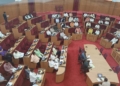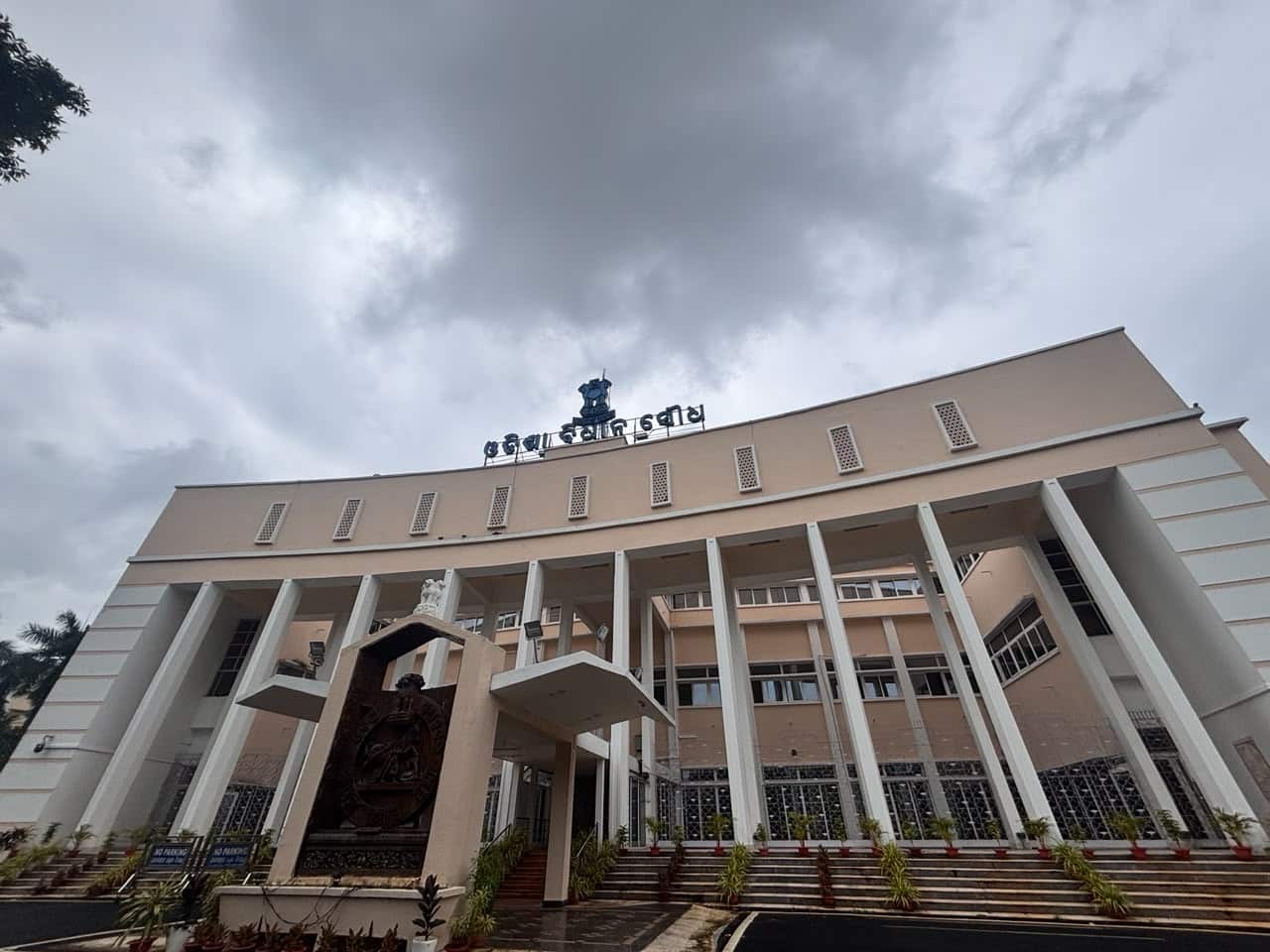
The Odisha Legislative Assembly on Wednesday passed the supplementary budget proposals for the Revenue and Disaster Management Department under the first supplementary statement of expenditure for the 2026–27 fiscal year, following hours of spirited debate, cut motions, and sharp political sparring.
Revenue and Disaster Management Minister Suresh Pujari tabled supplementary grant proposals under Demand No. 42 comprising ₹40 lakh for programme expenditure and ₹4,998.99 crore for the Disaster Response and Mitigation Fund—totaling nearly ₹5,100 crore. Speaker Surama Padhy informed the House that both proposals carried the recommendation of the Governor. Chief Minister Mohan Charan Majhi was also present in the House for 18 minutes during the proceedings.
Opposition Targets Flood Management and Relief Gaps
Initiating the debate, Opposition BJD MLA Arun Sahoo launched a sharp critique of the state government’s handling of recent calamities. BJD Chief Whip Pramila Mallik alleged that the late-October flooding in Purushottampur and neighboring areas of Ganjam—triggered by the sudden release of 1.37 to 1.40 lakh cusecs of water from the Rushikulya river system—was a “man-made and administrative disaster” rather than a natural one.
BJD Deputy Chief Whip Pratap Keshari Deb questioned the government’s claims of effective disaster management and demanded a district-wise and block-wise white paper detailing flood damage and relief distribution. BJD members also sought clarity on the ₹12,526 crore assistance sought from the Centre and whether relief had reached affected farmers and families. Other BJD lawmakers—including Byomakesh Ray, Gautam Buddha Das, Dhruba Charan Sahoo, Manohar Randhari, and Sarada Prasad Jena—participated in the discussion.
Congress leaders echoed concerns over fund utilisation and inter-departmental coordination. Congress Legislature Party (CLP) leader Ramachandra Kadam and senior MLA Tara Prasad Bahinipati argued that only 42% of funds in the revenue department and 18% in disaster management were spent in the previous budget, warning that fresh allocations without proper planning risk unspent surrenders. They cited poor coordination between the Water Resources and Disaster Management departments for delayed embankment repairs, pointing to flood hardships from Shergarh market in Ganjam to Dasarathpur block in Jajpur (including breaches at Kani and Nuanala), and alleged that genuine victims were missing from relief lists.
Both leaders also pressed the government to clarify its stand on the sensitive Kotia border dispute. After BJD members walked out around 9:23 PM expressing dissatisfaction with the government’s response, Kadam and Bahinipati stayed back awaiting a reply on Kotia before exiting at 9:41 PM prior to Pujari’s response.
Pujari Hits Back, Ruling MLAs Defend Long-Term Plans
Refuting the Opposition’s charges, Minister Suresh Pujari thanked members for their remarks and urged the Opposition to change its mindset, accusing critics of delivering speeches inside the Assembly instead of visiting affected areas on the ground. Questioning why the Opposition paralysed the House during the first three days rather than offering constructive advice during flood emergencies, Pujari remarked that if former chief minister Naveen Patnaik’s tenure was a model of disaster governance, sharing those lessons or guiding the current government would have benefited Odisha’s people.
Pujari reiterated the government’s commitment to transparent relief, rehabilitation, and rapid delivery of essentials, while warning that past controversies—including the Swami Lakshmanananda Saraswati murder case, missing files related to the SUM Hospital fire, and foreign trips by the former chief minister and officials—would all be investigated.
Supporting the demand for grants, ruling-party MLA Siddhanta Mohapatra highlighted lessons since the 1999 Super Cyclone, cited the administration’s response during Cyclone Dana, and stressed long-term measures such as a Rushikulya basin study and landslide mitigation. Ruling-party MLAs Manoranjan Dyani Samantaray, Saroj Kumar Padhi, Purnachandra Sethi, Durgaprasanna Nayak, Pratapchandra Nayak, and Dusmanta Swain also spoke in favor of the allocation.