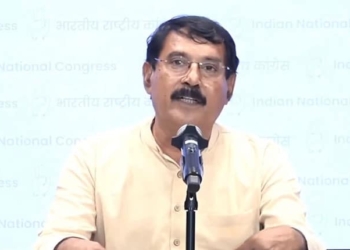
In a significant push to address Odisha’s high burden of emergency medical cases, Health and Family Welfare Minister Dr. Mukesh Mahaling has written to top officials at AIIMS Delhi and ICMR, proposing the inclusion of one district in the state under the National Health Priority Project (NHRP) for integrated emergency and trauma care.
During a visit to the Emergency Department and J.P.N. Apex Trauma Centre at AIIMS, New Delhi, Dr Mahaling reviewed advanced treatment protocols, patient management systems, and infrastructure. Impressed by the model, he formally requested collaboration to replicate similar life-saving systems in Odisha.
In his letter to ICMR Director General Dr Rajiv Bahl and AIIMS Professor Dr Sanjeev Bhoi — who leads the ICMR-funded NHRP initiative — the Minister highlighted the urgent need to strengthen emergency services across the state. According to the India State-Level Disease Burden Initiative (2019), Odisha ranks 8th in mortality rate and 3rd in Disability-Adjusted Life Years (DALYs) nationally. Major challenges include road traffic accidents, heart attacks, strokes, snakebites, and other critical emergencies.“Odisha requires a robust, integrated emergency and trauma care ecosystem to effectively manage these life-threatening conditions,” Dr Mahaling stated in the letter. He emphasised that the successful models developed under the NHRP, led by Prof. Sanjeev Bhoi, are highly relevant to Odisha’s context and could serve as a blueprint for the state.
The Minister has specifically requested that one district be adopted under the NHRP as a pilot project. Successful implementation in the chosen district would pave the way for statewide replication. He also expressed interest in signing a formal Memorandum of Understanding (MoU) with AIIMS to establish world-class integrated emergency care systems throughout Odisha.
This initiative is expected to significantly improve pre-hospital care, emergency response times, trauma management, and overall public health outcomes. Health experts view the proposed partnership as a potential game-changer for a state that continues to face high mortality from preventable and time-sensitive medical emergencies.
Dr. Mahaling expressed confidence that the collaboration with AIIMS Delhi and ICMR would mark a landmark step toward building a resilient healthcare infrastructure capable of saving thousands of lives every year.