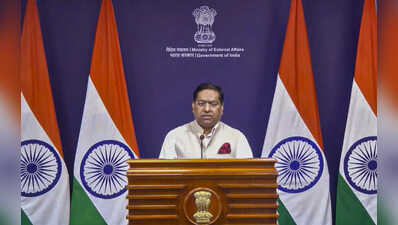
India’s Ministry of External Affairs (MEA) on Thursday issued a restrained response to controversial remarks linked to Donald Trump, who had shared a post referring to countries such as India and China as “hellholes.”
MEA spokesperson Randhir Jaiswal declined to elaborate on the issue, stating briefly, “We have seen some reports. That’s where I leave it,” when asked about the controversy during a media briefing.
Context Behind the Controversy
The remarks stem from a transcript shared by Trump on his Truth Social platform. The content originated from a talk show hosted by Michael Savage, who criticised the United States’ birthright citizenship policy.
In the discussion, Savage alleged that individuals travel to the US late in pregnancy to secure citizenship for their children and later sponsor family members. While making this argument, he used derogatory language to describe countries including India and China.
Debate Over US Immigration Policy
The post forms part of a broader debate in the United States over birthright citizenship, a right guaranteed under the United States Constitution. Critics like Savage argue that the provision is outdated in the modern era of global mobility, while supporters maintain it is a fundamental constitutional guarantee.
Trump has previously advocated revisiting or restricting this provision, making the issue a recurring theme in US political discourse.
International Reactions
The remarks have drawn global attention, with reactions emerging beyond India. Iran publicly criticised the statement, defending India and China as “cradles of civilisation.”
In a post on social media, Iran’s diplomatic mission suggested that such comments were inappropriate and referenced ongoing geopolitical tensions between Washington and Tehran.
Broader Implications
India’s measured response reflects a diplomatic approach aimed at avoiding escalation while acknowledging the issue. Analysts note that such statements, even when indirect, can influence bilateral perceptions and public sentiment.
The episode highlights how domestic political debates in one country can have international repercussions, particularly when they involve sensitive issues such as immigration and national identity.