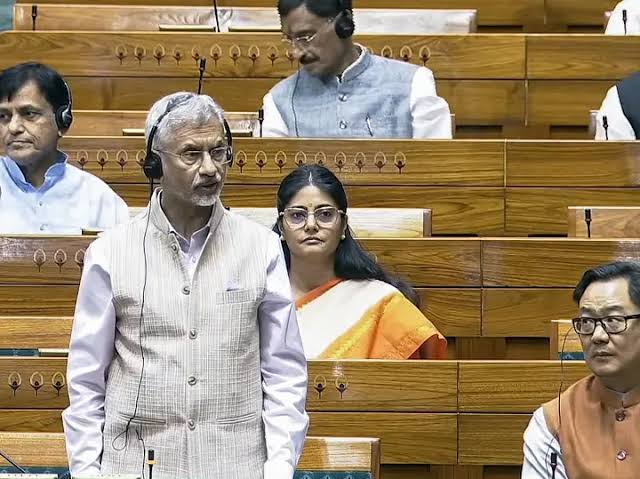
External Affairs Minister S. Jaishankar said direct diplomatic talks with Iran helped Indian ships resume passage through the Strait of Hormuz, one of the world’s most critical oil routes.
His remarks came days after two Indian-flagged LPG carriers were allowed to pass through the strait amid rising tensions in the Middle East.
Speaking to the Financial Times, Jaishankar said continued dialogue with Tehran has produced results.
“If it is yielding results for me, I would naturally continue to look at it,” he said.
He also clarified that Iran did not receive anything in exchange for allowing the Indian ships to pass.
“It’s not an exchange issue. India and Iran have a relationship,” Jaishankar said.
No Blanket Deal for Ships
Jaishankar explained that each ship’s passage was negotiated individually, and there is no blanket agreement with Iran.
Many Indian-flagged vessels are still waiting to cross the strategic waterway.
Earlier reports suggested about 22 Indian ships were stranded in the Persian Gulf region due to the conflict.
So far, four vessels have successfully crossed the strait.
Modi–Iran President Talks
The breakthrough came shortly after a phone conversation between Prime Minister Narendra Modi and Iranian President Masoud Pezeshkian.
It was their first discussion since the Iran-US war began.
Jaishankar also spoke with Iranian Foreign Minister Abbas Araghchi, which helped facilitate the passage of the ships.
US Sends Warships to Protect Strait
Meanwhile, US President Donald Trump said the United States would send warships to ensure the Strait of Hormuz remains open.
Around 20% of the world’s oil supply passes through this narrow shipping route, making it vital for global energy markets.
Oil prices have already surged due to the ongoing conflict, with crude hovering around $100 per barrel.
Iran Clarifies Who Can Pass
Iran has said the strait remains open to most countries, but closed to US and Israeli vessels.
Iranian Foreign Minister Abbas Araghchi said:
“The Strait of Hormuz is open. It is only closed to tankers and ships belonging to our enemies.”
The conflict in the Middle East has disrupted global shipping routes and raised fears of further oil price spikes.