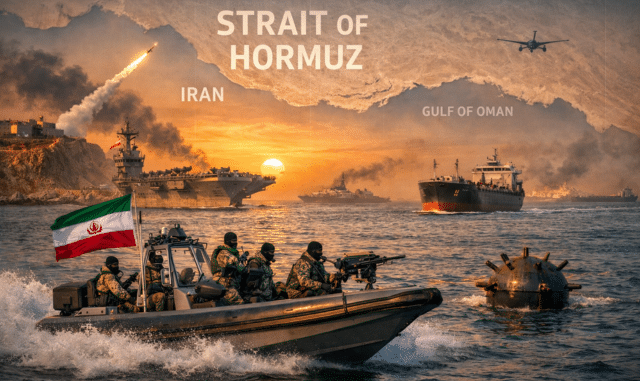
The Middle East conflict entered a new dimension on Thursday as Mojtaba Khamenei, son of Iran’s Supreme Leader, announced a “new phase” in managing the Strait of Hormuz.
Broadcast on state television, the statement underscored Tehran’s intent to tighten its grip on the world’s most critical oil corridor, which handles nearly 20 per cent of global supply.
The announcement comes against the backdrop of a two‑week ceasefire agreed between Iran and the United States, with talks scheduled in Islamabad. Yet Israel has excluded Lebanon from the truce, continuing strikes against Hezbollah that have left more than 250 dead and over 1,100 injured. Lebanese Prime Minister Nawaf Salam is preparing a UN complaint, while Israeli Prime Minister Benjamin Netanyahu authorised direct negotiations with Beirut but vowed military operations would persist.
Iran’s insistence that the ceasefire covers all its allies has been rejected by Washington and Tel Aviv, fueling diplomatic friction. European leaders, including Germany, Italy, and the UK, have criticised Israel’s stance, while Australia and South Korea urged citizens to leave Lebanon. Meanwhile, maritime traffic through Hormuz remains near a standstill, with reports of Iranian sea mines and restrictions limiting passage to 15 ships per day.
Global markets reacted sharply: oil prices surged past $97 per barrel, Asian stocks retreated, and airlines such as Air France suspended flights to Middle Eastern destinations. Anti‑war protests erupted in New York and London, reflecting growing public unease.
Analysts view Khamenei’s “new phase” rhetoric as a calculated signal of escalation. By formalising control over Hormuz, Iran is leveraging its most potent geopolitical tool to pressure adversaries and extract concessions. The timing—amid ceasefire talks and regional diplomacy—suggests Tehran is reminding the world of its ability to disrupt energy flows.
For energy markets, the implications are immediate: heightened uncertainty, price volatility, and insurance risks. For diplomacy, the move complicates U.S.‑Iran negotiations and raises stakes for Gulf states reliant on secure passage.
As ceasefire talks unfold in Pakistan, the Strait of Hormuz looms as both a bargaining chip and flashpoint in a conflict with global consequences.