In a landmark moment for sustainable governance, Odisha Lok Bhavan in Bhubaneswar has been certified as India’s first Platinum-rated green campus under the Indian Green Building Council (IGBC) Green Campus Rating System.
The sprawling official residence of the Governor scored an impressive 88 out of 100 points, placing it in the highest category of the revised and more stringent IGBC Green Campus v1 rating launched in July 2024.
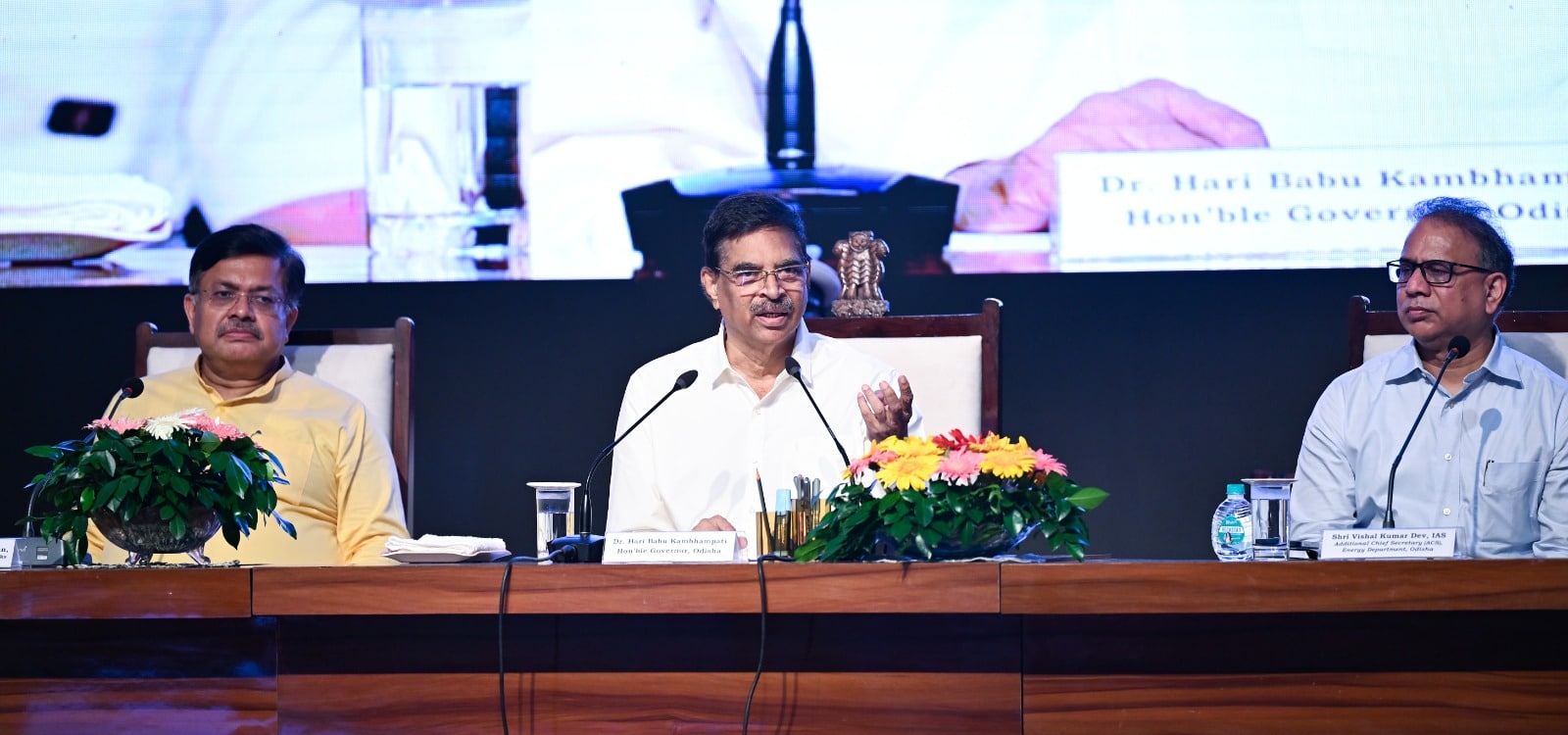
Odisha Governor Dr. Hari Babu Kambhampati received the Platinum certificate from IGBC National Chairman C. Shekar Reddy at a ceremony held in the New Abhishek Hall on Tuesday. The recognition crowns years of systematic work to transform the campus into a living example of environmental responsibility.
“When governance goes green, the future grows stronger,” the Governor said. He described the achievement as a matter of pride for Odisha and the result of collective effort. “The certification recognises our steps in greenery, clean energy generation and use, and electric mobility. Whatever recommendations were made, we implemented them — and we have achieved the highest rating.”
The campus now stands as one of the highest-rated green campuses in the country and the first Lok Bhavan anywhere in India to earn Platinum status. It is also the first official residence in the country to convert the Governor’s entire official carcade to electric vehicles.
What earned the Platinum rating
More than 80% of the campus is under green cover. Teams have documented 2,374 trees belonging to 72 species, along with 27 faunal species. Water use has been cut by more than 35% through efficient landscaping, rainwater harvesting and groundwater recharge systems. Organic waste is fully treated and reused; dry waste is 100% diverted from landfill.
On the energy front, a 635 kWp rooftop solar system now powers much of the campus. The Energy Performance Index stands at an efficient 50.57 kWh/m²/year, supported by LED lighting and smart timer-based controls. Internal mobility relies on electric vehicles, backed by dedicated EV charging infrastructure. Plans are already underway to add a small wind turbine to further strengthen the renewable mix.
The Governor drew a sharp comparison to underline the opportunity: Germany receives barely 100 days of sunshine a year yet makes extensive use of solar power. Odisha enjoys nearly 300 sunny days. “If we do not use this energy, it is a crime,” he said, urging households and institutions across the state to install rooftop solar.
A model for others
Dr. Kambhampati announced that he will present the certificate to Prime Minister Narendra Modi during his next visit to Delhi. He expressed hope that the success will inspire other institutions — especially universities — to pursue green certification. Thousands of students graduate every year, he noted; they can become ambassadors of environmental protection if campuses themselves lead by example.
Similar work has already begun at the Puri Lok Bhavan, starting with a proposed 100 kWp solar plant.
Law, Works and Excise Minister Prithviraj Harichandan called the certification a source of pride for Odisha and a practical demonstration of the Governor’s commitment to the environment. He said it would encourage other government departments to embed green measures when planning new buildings.
Senior officials from the Energy Department, Forest, Environment and Climate Change Department, university vice-chancellors, IGBC representatives and media were present at the ceremony.
Odisha Lok Bhavan has shown that a working public institution can generate its own clean energy, conserve water, protect biodiversity and adopt electric mobility without compromising its official functions. In doing so, it has set a new national standard — one that other Raj Bhavans and government campuses can now follow.