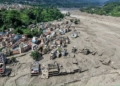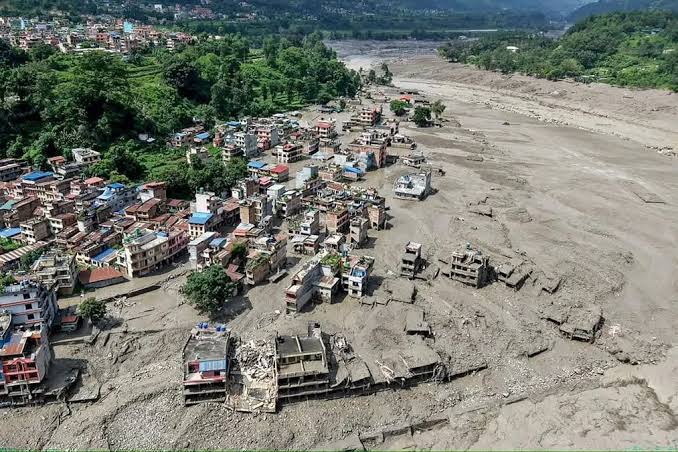
Nepal has called for climate compensation following devastating flash floods that have killed more than 1,000 people and left thousands missing.
Nepal’s Foreign Minister Shisir Khanal said international assistance for the country’s recovery should not be viewed simply as aid or charity. Instead, he argued that vulnerable countries affected by climate change deserve justice and compensation from nations that have historically contributed more to global greenhouse gas emissions.
Speaking to Kantipur TV, Khanal said Nepal contributes a “virtually negligible” share of global greenhouse gas emissions but is facing severe consequences of a warming planet, including rapid glacier melt and extreme mountain disasters.
“We are paying the ultimate price for a global crisis we did not create,” Khanal said, according to PTI.
Nepal shifts from aid to ‘justice and compensation’
Khanal said Nepal’s diplomatic approach would increasingly move away from simply seeking assistance and towards demanding accountability for climate-related losses.
He described recovery support following the floods as a “moral liability” rather than charity.
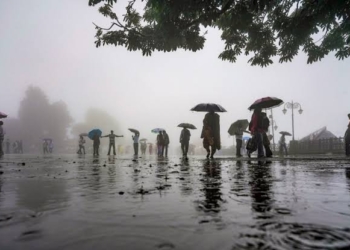
The comments come as Nepal continues to deal with the aftermath of severe flooding and landslides across parts of the Himalayan nation.
Climate experts have repeatedly warned that rising temperatures are accelerating changes in mountain environments, increasing risks linked to glacier and ice instability and extreme rainfall.
India, China and US named among major emitters
Khanal identified India, China and the United States as the world’s largest greenhouse gas emitters and argued that these countries have a historical responsibility towards vulnerable nations such as Nepal.
Data from the European Commission’s Emissions Database for Global Atmospheric Research, cited in the report, showed that China, the US, India, the European Union, Russia and Indonesia were among the largest greenhouse gas emitters in 2024.
Together, these countries accounted for a significant share of the global population, economic output, fossil-fuel consumption and greenhouse gas emissions.
India stresses climate equity
India has consistently highlighted the principle of climate equity, arguing that countries’ climate responsibilities should account for differences in historical emissions, development needs and financial and technological capacities.
New Delhi has also maintained that developed countries, which industrialised earlier, have used a larger share of the global carbon budget.
India has called for developed nations to provide financial resources and other support to developing countries dealing with the effects of climate change.
Nepal bears severe climate risks
Experts cited in the report said Nepal’s relatively small contribution to global emissions contrasts sharply with the scale of climate-related risks it faces.
Saswata Sanyal, a disaster risk resilience expert at the International Centre for Integrated Mountain Development in Kathmandu, said Nepal has been affected by emissions from wealthier countries and stressed the need for stronger disaster planning and early warning systems.
Nepali climate policy expert and UN climate negotiator Manjeet Dhakal said Nepal contributes less than 0.1% of global greenhouse gas emissions while experiencing some of the severe consequences of climate change.
The devastating floods, experts said, highlight the need for faster emissions reductions, stronger climate adaptation measures and better disaster preparedness in vulnerable mountain regions.