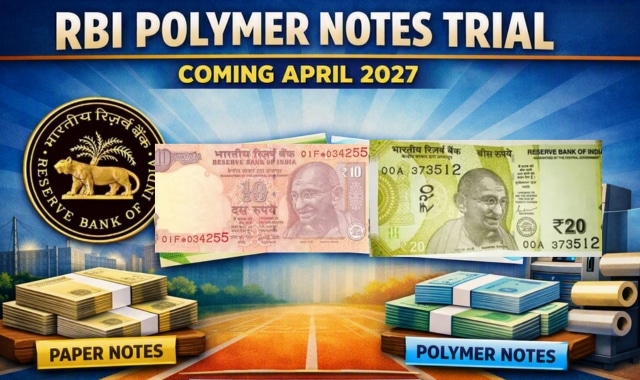
The Reserve Bank of India (RBI) has announced that polymer (plastic) banknotes may enter circulation from April 2027, beginning with Rs 10 and Rs 20 denominations.
Governor Sanjay Malhotra confirmed the timeline after the Monetary Policy Committee meeting, stating that the rollout depends on successful field trials.
The government has already approved printing of 1 billion pieces each of ₹10 and ₹20 notes for the pilot phase. These polymer notes will circulate alongside existing paper notes, with no plan to replace or withdraw paper currency.
Polymer notes are expected to last two to four times longer than paper notes, especially in India’s challenging climate and heavy cash‑usage environment. Starting with low‑value notes minimises financial risk while testing durability.
The RBI’s printing arm, BRBNMPL, has floated a global tender for the special polymer substrate. ATMs and banking systems will be gradually upgraded if polymer notes expand to higher denominations later.
India first considered polymer notes over a decade ago, with a pilot planned between 2009 and 2014 that was shelved due to technical hurdles. This time, improved technology and supply chains have enabled the RBI to move forward.
For the public, this means wallets will soon carry both paper and plastic notes. If trials succeed, polymer notes could eventually expand to higher denominations, but for now, Rs 10 and Rs 20 will lead the way.