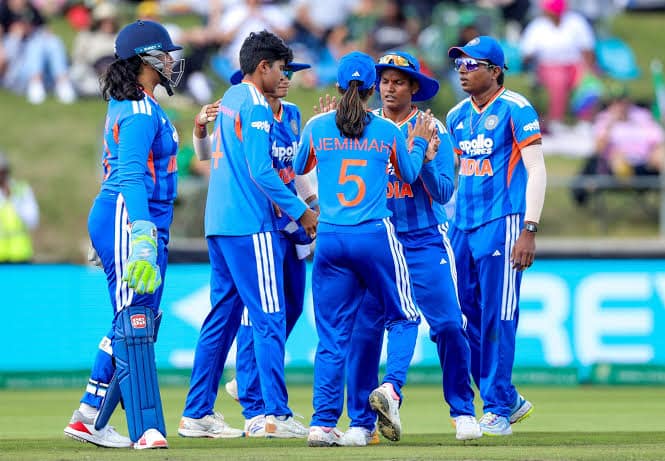
India’s women’s cricket team deserves applause for winning yet another Asia Cup title, but the record eighth triumph should also serve as a reminder that the team has bigger targets ahead.
Harmanpreet Kaur’s side defeated Sri Lanka by 72 runs in the final at the Dubai International Cricket Stadium on Sunday to reclaim the continental crown. It was also a measure of redemption after Sri Lanka defeated India in the Asia Cup final two years ago in Dambulla.
The victory deserves to be celebrated. However, for a team that has established itself as the dominant force in Asian women’s cricket, the Asia Cup cannot be the ultimate benchmark anymore.
Asia Cup success is becoming the norm
India have now won the Women’s Asia Cup eight times in 10 editions, underlining their dominance in the region.
While every championship deserves recognition, India’s superiority over most Asian opponents means the team must now set its sights higher.
The bigger challenge is succeeding consistently against the best teams in the world, particularly in ICC tournaments.
T20 World Cup remains unfinished business
India are yet to win the Women’s T20 World Cup.
The team finished runners-up in 2020 and reached the semi-finals in 2009, 2010, 2018 and 2023. However, India failed to progress beyond the group stage in the most recent edition earlier this year.
Given the significant investment in women’s cricket and the growth of the sport in India, expectations are understandably much higher.
The historic ODI World Cup triumph on home soil last year was a major milestone, but it also raised the bar for the team.
BCCI has created a strong ecosystem
The infrastructure and financial support available to India’s women cricketers have grown significantly in recent years.
The players receive strong backing from the BCCI, while the Women’s Premier League has provided another high-level platform for domestic and international competition.
With financial security, professional facilities and increased exposure, the Indian team has many of the ingredients required to become a consistent global powerhouse.
The next step is converting that support into more ICC titles.
Is it time for a leadership change?
Harmanpreet Kaur’s leadership record is likely to come under scrutiny as India look ahead.
During the Asia Cup, she became the first cricketer, male or female, to captain in 150 T20I matches. She has also led India at five T20 World Cups since 2018.
India reached the semi-finals, final and semi-finals in the first three editions under her captaincy, but their performances in the last two tournaments have been disappointing.
The question of leadership succession, therefore, could become an important discussion.
Smriti Mandhana could be considered for a larger leadership role in white-ball cricket as India look to build towards their next major ICC campaign.
Batting, fielding need improvement
The Asia Cup also exposed areas that India cannot afford to ignore.
There were batting collapses and fielding lapses during the tournament. Against stronger opposition, such mistakes could prove costly.
The team will need to improve its consistency, particularly under pressure, if it wants to compete successfully against the likes of Australia, England and other top international sides.
India must develop a taste for ICC trophies
The Asia Cup victory is a significant achievement and should not be diminished. But continental dominance alone cannot define the ambitions of a team that has grown so rapidly.
India’s women have already shown that they can win major tournaments, as demonstrated by their ODI World Cup triumph last year.
Now, the challenge is to make ICC trophies a regular part of that success.
The Asia Cup celebrations can continue, but the bigger question is what comes next. For Harmanpreet Kaur’s India, the answer should be clear: aim higher and turn their growing dominance into sustained success on the global stage.