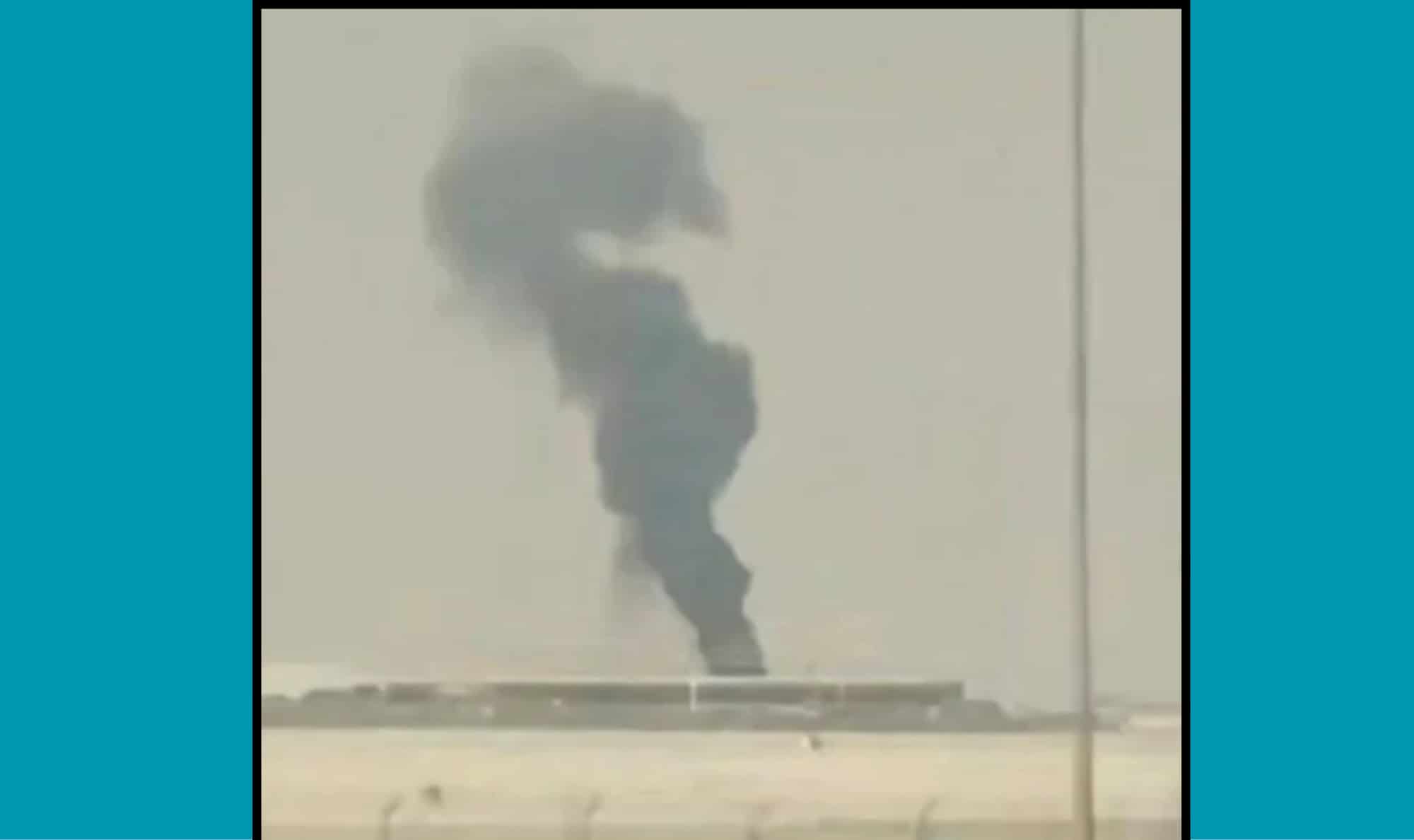
Riyadh was jolted by deafening explosions on Thursday as a ballistic missile strike targeted King Khalid International Airport, marking a sharp and alarming escalation in Yemen’s renewed civil war.
Plumes of black smoke were seen rising from a stationary aircraft at the facility, while flight-tracking data confirmed that the vital transit hub had ground to a complete standstill.
The Iran-backed Houthi movement quickly claimed responsibility for the attack in an official statement, with military spokesman Yahya Saree boasting that the missile had successfully struck its target. The group warned that it intends to continue tightening its grip on Saudi airspace, raising severe concerns for regional commercial aviation safety.
While the Saudi-led coalition reported intercepting two ballistic missiles aimed at the capital, the impact of the attack was immediate. Flight operations were severely disrupted, cementing King Khalid International Airport’s status as one of the world’s most heavily impacted hubs amid the ongoing unrest.
The security shockwaves rippled far beyond the tarmac. Major multinational companies located in Riyadh’s prominent King Abdullah Financial District (KAFD) immediately instructed their workforces to shift to remote work. Diplomatic missions issued security advisories, and several local schools directed students to shelter in place as panic rippled through the financial capital.
This violent flare-up underscores the rapid collapse of Yemen’s 2022 ceasefire. With the Houthis launching fresh offensives near the Bab el-Mandeb Strait and besieging Taiz, alongside Saudi counteroffensives, the renewed violence has already displaced some 200,000 civilians. As the conflict spills past Yemen’s borders, international observers watch with growing anxiety, hoping for diplomatic intervention to stem a broader humanitarian and security catastrophe.