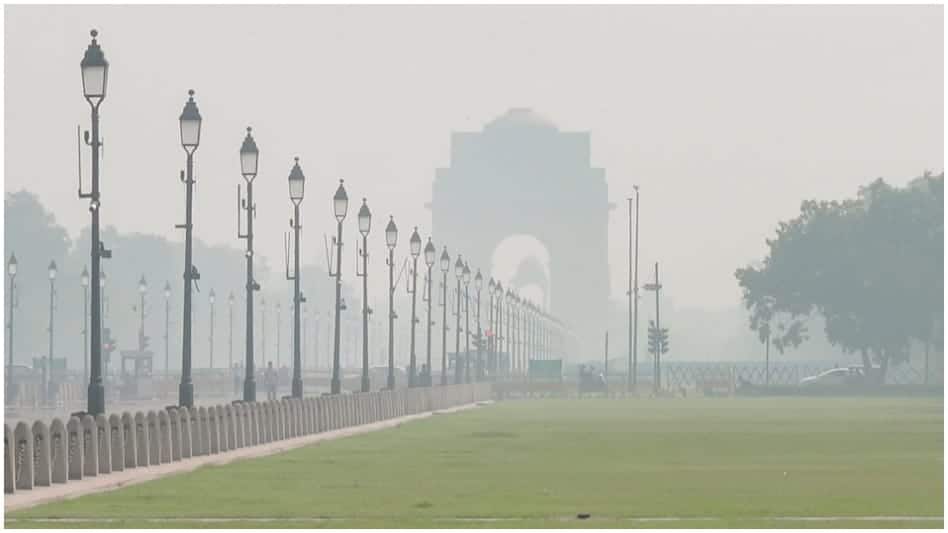
Air quality in the national capital plummeted to the “very poor” category for the first time this season on Monday morning, November 2, 2026, as a heavy layer of toxic smog enveloped Delhi-NCR following a sharp increase in pollutant concentrations.
The sharp deterioration ends a brief spell of relief brought by rain late last week, which had temporarily granted Delhi its cleanest October air in four years.
Air Quality Breakdown & Station Readouts
According to Central Pollution Control Board (CPCB) data, the 24-hour average Air Quality Index (AQI) stood at 307 at 7:05 AM and rose to 310 by 8:00 AM on Monday, plunging the city back into winter pollution conditions:
Out of 58 functional monitoring stations, 36 recorded “very poor” air quality. Jahangirpuri emerged as the worst-affected area, entering the “severe” category with an AQI of 417. Fine particulate matter (PM_{2.5[span_1](start_span)}) was identified as the lead pollutant across 51 stations, while PM_{10} dominated the remaining 7 stations.
Delhi last recorded a “very poor” air quality reading on February 11, 2026, when the AQI touched 305.
Stubble Burning and Meteorological Forecast
Satellite tracking by NASA recorded 1,394 farm fires across Punjab and Haryana between October 1 and November 1, 2026. Analysts note that late-afternoon stubble burning combined with calm wind conditions is preventing the dispersion of atmospheric emissions.
Meteorologists have warned that no favorable weather systems are expected over the next 7 to 10 days. Unfavorable north-westerly wind flows are anticipated to cause pollution levels to escalate further across Delhi-NCR and the northern plains during the lead-up to Diwali.