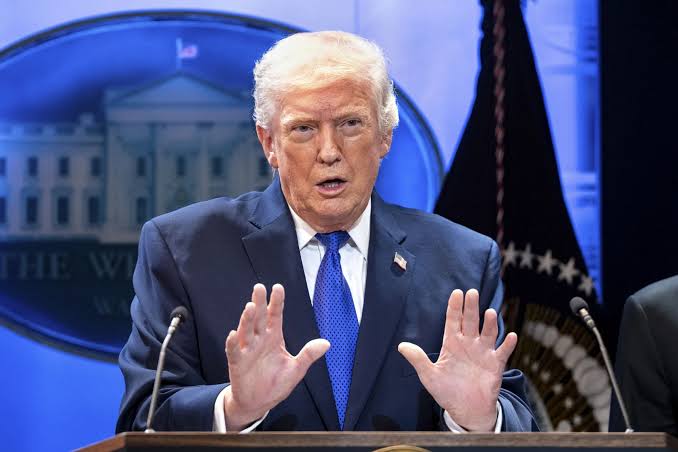
The Trump administration is preparing to bypass Congress and expand its reliance on executive orders to enact trade policies, trade experts and congressional aides revealed on Sunday, November 1, 2026.
The strategy comes as Democrats prepare for a potential shift in power following the upcoming November 3 US midterm elections, with opposition lawmakers planning oversight investigations and targeted legislation to roll back key tariffs.
Democrats Plan Legislative Challenge to Trump’s Tariffs
Should Democrats gain control of the US House of Representatives or the Senate—where Republicans currently hold narrow majorities of 218–214 and 53–47, respectively—party leaders plan to introduce legislation aimed at curbing executive trade powers.
Proposed legislation, such as Senator Chuck Schumer’s “End Trump’s Tariff Tax Act”, aims to repeal Section 338 of the Tariff Act of 1930 and Section 122 of the Trade Act of 1974. These provisions have served as the legal basis for punitive duties on Canadian goods and temporary 10% global import tariffs.
The bill, supported by top Senate Finance Committee Democrat Ron Wyden, seeks to refund duties collected under these older statutes. “One of the most obvious priorities would be repealing Trump’s tariffs on Canada, which are raising prices and harming communities on both sides of the border,” Wyden stated.
Even if Democrats win majority control in one or both chambers, political analysts note they will fall well short of the two-thirds majority required to override a presidential veto. William Reinsch, non-resident adviser at the Center for Strategic and International Studies (CSIS), noted: “I just don’t think anything’s going to get across the finish line because neither party will have a veto-proof majority.”
Oversight Hearings and White House Stance
Short of overturning tariffs legislatively, Democratic leaders intend to utilize congressional trade committees to launch formal investigations into tariff exemption processes for individual companies and the economic impact on small businesses.
Despite the prospect of heightened scrutiny, the White House reaffirmed that President Donald Trump will continue to utilize executive authority to enforce trade protectionism.
White House spokesperson Matthew Middleton confirmed in a statement that the administration will not back down:
”President Trump will never waver from putting America First, whether in trade negotiations or through an economic agenda of tax cuts and deregulation.”
Middleton highlighted that the administration has secured nearly 20 trade agreements and trillions in manufacturing commitments, with further investigations planned into excess industrial capacity across 16 major trading partners.