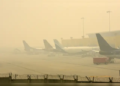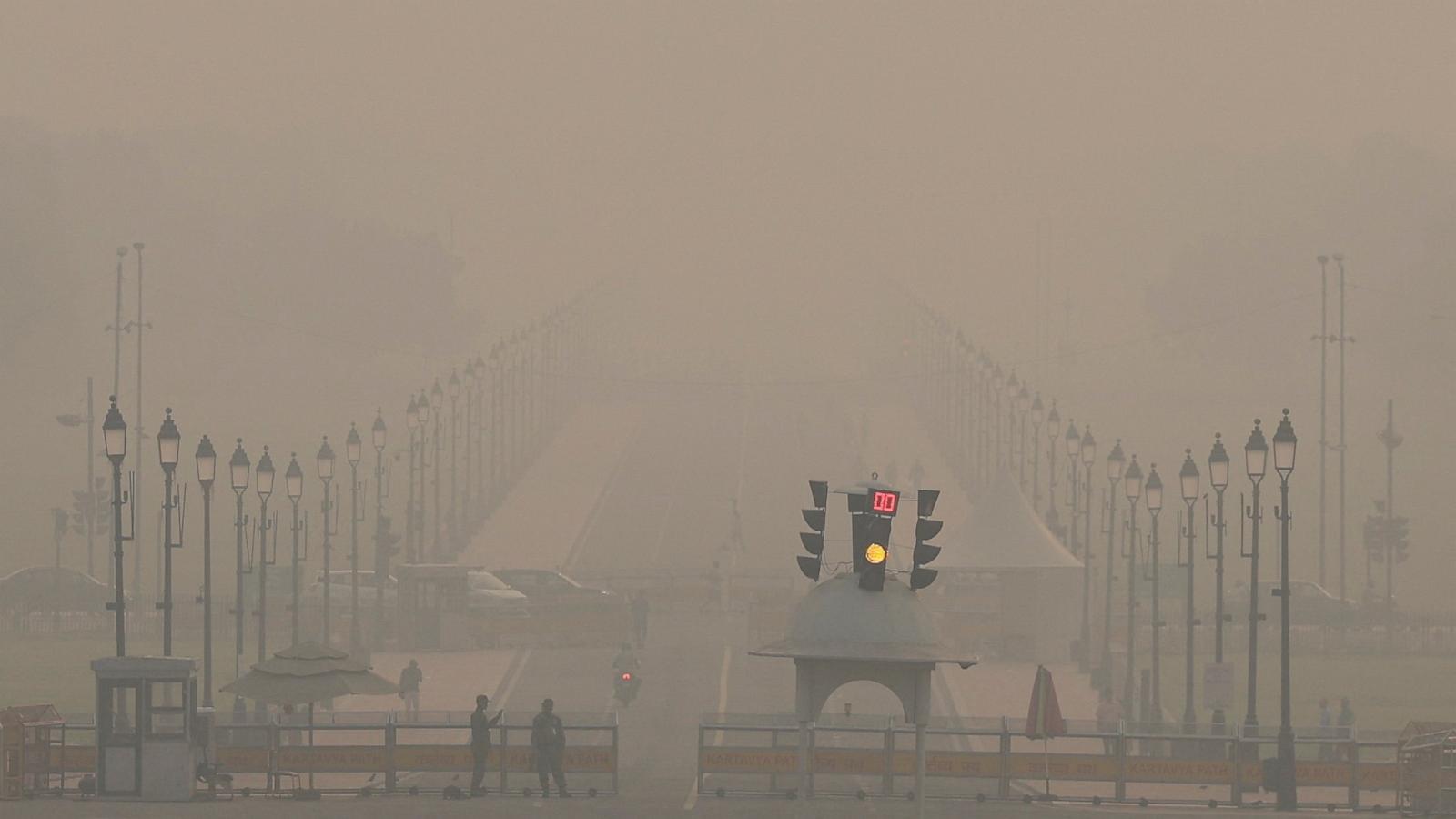
Delhi’s air quality deteriorated for the fifth consecutive day on Wednesday, November 4, 2026, with the 24-hour average Air Quality Index (AQI) surging to 377—deep inside the “very poor” bracket—as a dense blanket of toxic smog settled across the National Capital Region.
According to projections issued by the Air Quality Early Warning System, environmental conditions are expected to worsen sharply into the “severe” category (AQI 401–500) on November 6 and 7, coinciding with peak festive firecracker emissions, with hazardous air likely persisting for nearly a week.
Rapid Deterioration & Monitoring Station Breakdown
The steady surge in pollution levels follows a sharp drop from post-rain “satisfactory” levels (AQI 60) recorded last week. The index rose sequentially from 117 on Saturday to 261 on Sunday, 324 on Monday, and 350 on Tuesday before climbing to 377 on Wednesday.
- Severe Clusters: Out of 59 operational monitoring stations across Delhi, 21 stations recorded AQI levels exceeding 400, placing them in the “severe” category.
- Highest & Lowest Readings: IIT-Delhi and Jahangirpuri recorded the capital’s worst air quality at 451. Conversely, IGNOU Maidangarhi registered the city’s lowest AQI at 275 (“poor” category).
- Weather Metrics: Maximum temperatures settled at 29.8°C (0.7°C below normal), while minimum temperatures dropped to 16.1°C at Safdarjung, under clear skies with zero rainfall.