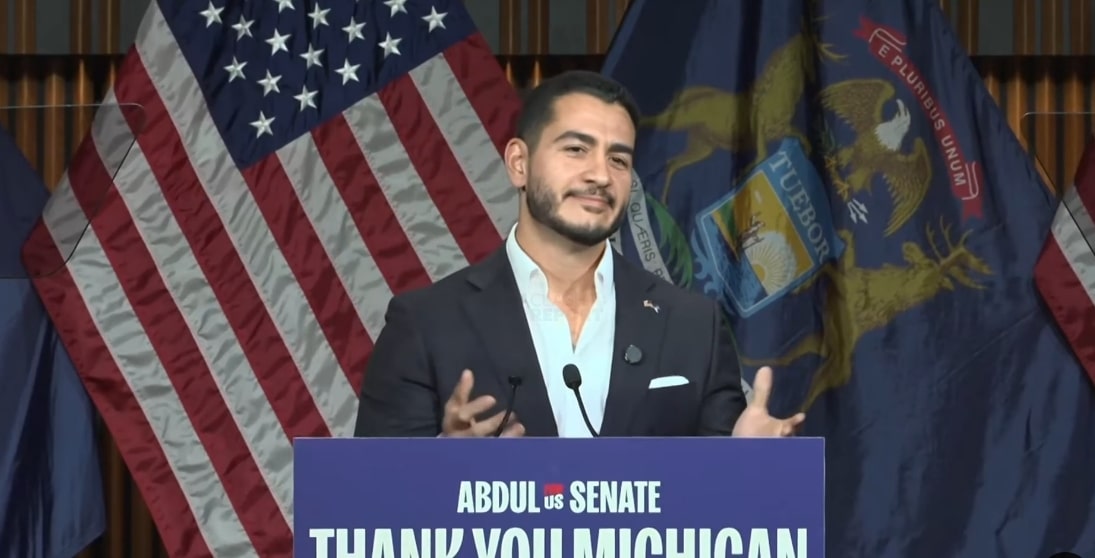
In a historic political milestone in the United States, Abdul El-Sayed has been elected as the first Muslim member of the US Senate, representing Michigan.
The landmark victory has sparked interest not only in America but also in India due to an intriguing connection to Karnataka’s coastal town of Bhatkal.
While El-Sayed’s political journey has been shaped in the United States, his family’s ties extend to India through his wife, Sarah Jukaku, whose ancestors hail from Bhatkal in Uttara Kannada district.
The Jukaku family is well known in Karnataka’s socio-political landscape. Sarah’s grandfather, J.H. Shamsuddin Jukaku, was a respected lawyer, educationist, and politician who served in the erstwhile Mysore State government. He played a significant role in public administration and contributed to the development of the Bhatkal region.
According to reports, Shamsuddin Jukaku emerged as an influential leader within the Nawayath Muslim community and was instrumental in advancing infrastructure and educational initiatives in the coastal belt.
The family’s connection to the United States began when Shamsuddin’s son, Dr. Jukaku S. Tayeb, pursued his medical career abroad and eventually settled in Michigan. His daughter, Sarah, grew up in the state while maintaining close ties with her ancestral roots through regular visits to Karnataka.
Sarah met Abdul El-Sayed during their time at the University of Michigan through the Muslim Students’ Association. The couple married in 2006 and have remained active in public life.
El-Sayed has often spoken about his connection to South Indian culture through his marriage, remarking that two decades with a South Indian family had thoroughly immersed him in its traditions.
As the newly elected senator prepares to begin a new chapter in American politics, his family’s Karnataka connection has become a point of pride for many in Bhatkal, highlighting how local legacies can echo across continents and generations. Based on the report, the story underscores how global political milestones can often carry deeply personal and transnational connections.