As Ganesh Puja festivities draw to a close, idol immersion processions across the capital and its periphery have reached peak intensity.
However, despite repeated appeals and designated arrangements by civil authorities to keep water bodies pollution-free, widespread administrative non-compliance has sparked intense civic outrage.
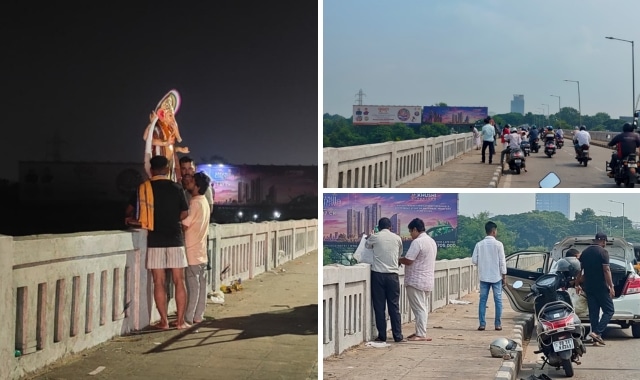
A shocking disregard for environmental norms has surfaced at the Kuakhai River bridge, where citizens are casually flinging Lord Ganesh idols, plastic waste, puja paraphernalia, and flowers straight off the highway bridge into the riverbed below.
BMC’s Artificial Ponds Ignored
To shield natural water bodies from toxic chemical dyes, Plaster of Paris (PoP), and non-biodegradable waste, the Bhubaneswar Municipal Corporation (BMC) constructed specialised polythene-lined artificial ponds along the banks of the Kuakhai, Daya, and Tankapani rivers.
These designated sites are equipped with heavy cranes, hydra machines, dedicated operators, and sanitation workers to ensure smooth, eco-friendly immersions. Under civic guidelines, idols immersed in these temporary ponds are removed within 24 hours to municipal dumping yards, followed by chemical treatment of the water using lime and disinfectants.
Despite these elaborate arrangements, numerous puja committees and individual citizens are openly bypassing the artificial ponds.
Traffic Congestion and Safety Hazards
The illegal dumping has created severe secondary hazards. Commuters and organisers are stopping their vehicles right in the middle of the busy National Highway over the Kuakhai bridge to hurl idols and refuse over the railings.
This reckless behaviour has caused major traffic bottlenecks while posing grave safety hazards to oncoming highway traffic.
Awareness Campaigns Fall on Deaf Ears
The defiance comes despite extensive joint efforts by the BMC and the Commissionerate Police. Authorities utilised social media campaigns, loudspeakers, banners, and police patrolling near riverbanks to divert processions to designated immersion zones.
Regulations issued by the State Pollution Control Board explicitly prohibit direct immersions into natural water bodies and mandate the use of eco-friendly clay idols. Yet, many citizens continue to turn a blind eye to environmental laws and court mandates.
Call for Strict Fines and CCTV Monitoring
Environmentalists and concerned local residents have sharply criticised the public apathy, pointing out that true religious devotion does not involve disrespecting an idol by tossing it off a bridge to save a few minutes.
Civic activists are now demanding stringent penal measures, including high-definition CCTV surveillance on all major bridges, heavy spot fines, and legal prosecution against violators.
Until strict punitive action is enforced, civic observers warn, public awareness alone may fail to stop the ecological degradation of Odisha’s vital rivers.