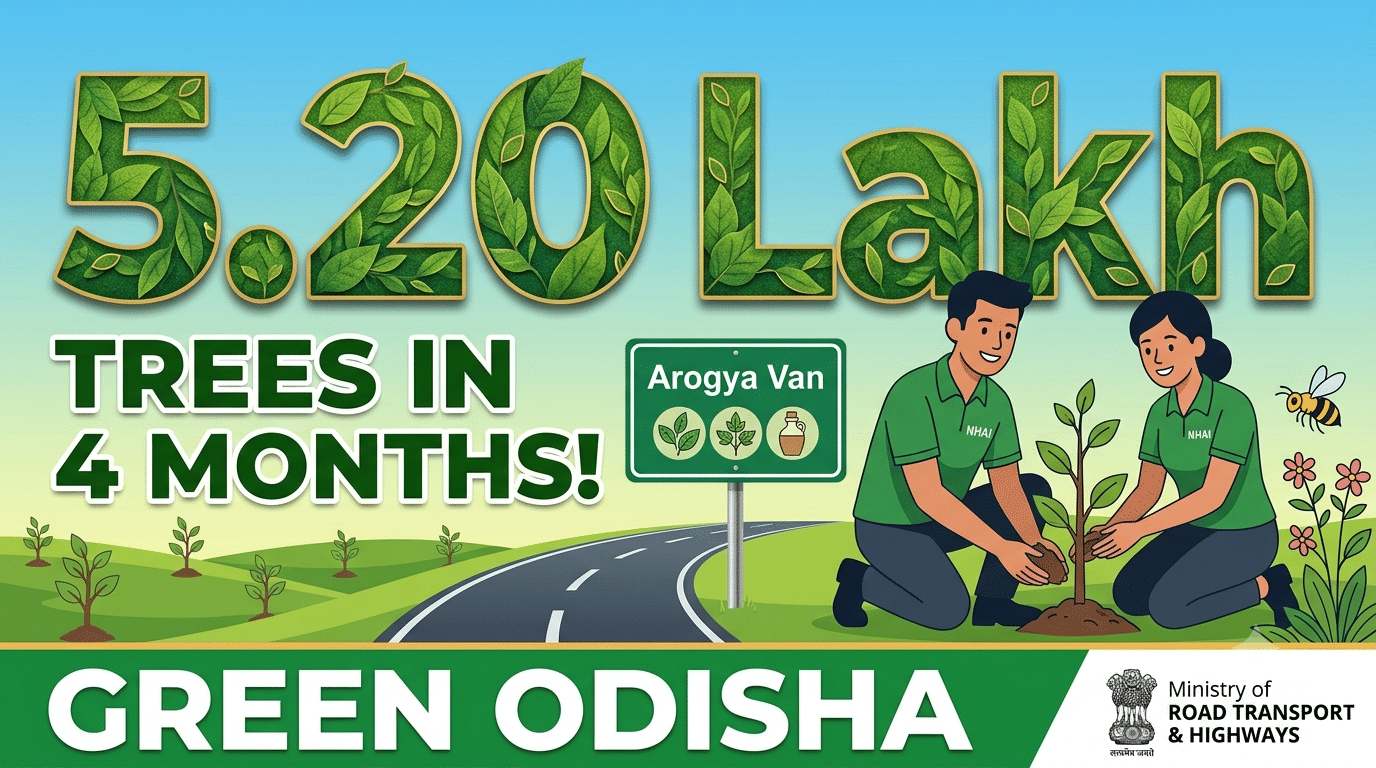
In a major effort to integrate ecological sustainability with national highway development, the National Highways Authority of India (NHAI) Regional Office Odisha has planted 5.20 lakh saplings across the state within a span of four months.
The comprehensive plantation drive incorporates several specialized ecological initiatives aimed at boosting local biodiversity, supporting wildlife, and improving overall highway infrastructure aesthetics.
Key Highlights of the Plantation Drive
Arogya Van Initiative: Focuses on traditional medicinal biodiversity. A total of 2,500 medicinal plants—including indigenous species like Neem, Amla, Harida, and Bahada—have been planted at Kunduli in Koraput district along the Raipur–Visakhapatnam Economic Corridor (NH-130CD).
Bee Corridors: To support local pollinators and roadside vegetation, NHAI planted 39,337 pollinator-friendly plants, including species such as Kadamba, Arjun, Spathodea, Patoli, and Tabebuia rosea.
Highway Median Greening: A total of 87,338 flowering plants, including Bougainvillea, Tecoma, Calliandra, and Caesalpinia, were planted along highway medians to enhance visual appeal and green coverage.
Community & School Engagement: The drive includes 6,000 bamboo plants and 7,097 community-based plantations. NHAI has extended these greening activities to schools, colleges, and local community spaces to foster broader environmental consciousness and collective responsibility.
Through these combined efforts, NHAI aims to create ecologically resilient highway corridors while active community participation helps extend environmental benefits beyond the roadsides across Odisha.