As the swollen Baitarani, Salandi and Akhuapada rivers continued to pose challenges across coastal Odisha, Deputy Chief Minister Pravati Parida moved decisively on Wednesday, combining high-level review meetings with personal visits to flood-hit villages to ensure no affected family is left without support.
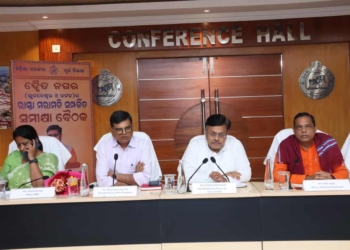
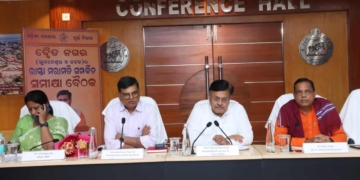
In Bhadrak, the Deputy Chief Minister chaired a detailed review meeting at the Collectorate Conference Hall. Officials briefed her on water levels, breached embankments, damaged culverts and bridges, the functioning of shelter centres and community kitchens, distribution of dry food and safe drinking water, public health measures, veterinary care, cattle feed, fish seed supply, crop losses, road connectivity and power restoration.
Parida issued clear directions: restore road connectivity on priority, achieve 100 per cent distribution of dry food and drinking water in marooned villages, ensure adequate cattle feed, and deploy additional medical teams to prevent water-borne diseases. She specifically instructed ASHA and Anganwadi workers to intensify awareness campaigns on health and hygiene. The Water Resources and Rural Development departments were told to closely monitor vulnerable embankments and carry out immediate repairs.
“An integrated and coordinated response is essential,” she emphasised, urging all departments and public representatives to work together. The meeting was attended by Bhadrak MLA and District Planning Board Chairman Sitanshu Sekhar Mohapatra, Collector Somesh Kumar Upadhyay, ADM Rabinarayan Sahu, CDO-cum-EO Subhendra Samal, the Superintendent of Police, Sub-Collector Saurabh Chakraborty and other senior officials.
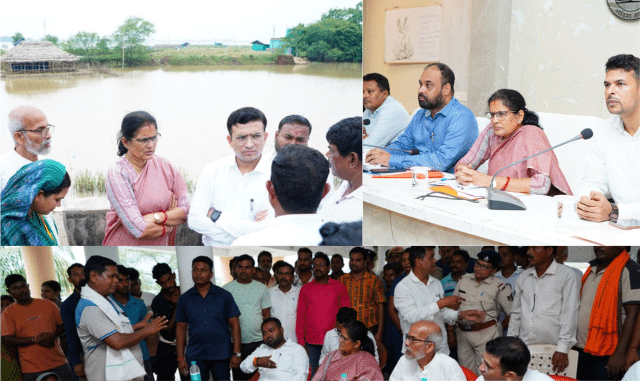
Earlier in the day, the Deputy Chief Minister visited Barsar and Gobindpur villages in Tihidi block. Interacting with local residents, she assessed the ground situation first-hand and assured them that the Odisha Government would extend all possible assistance and timely support to flood-affected families.
Later, Parida travelled to flood-affected Kurudiha Gram Panchayat under Baleshwar Sadar Block. She interacted directly with residents, listened to their immediate grievances and living conditions, and held on-site discussions with local administrative officers. She directed officials to expedite the distribution of essential relief materials, monitor health and safety parameters, and ensure that assistance reaches every affected household without delay.
With rivers still running high and several areas remaining vulnerable, the Deputy Chief Minister’s dual approach—policy-level review backed by personal presence on the ground—has sent a strong message of urgency and accountability. Residents in both districts now look forward to the accelerated relief and restoration measures she has ordered.