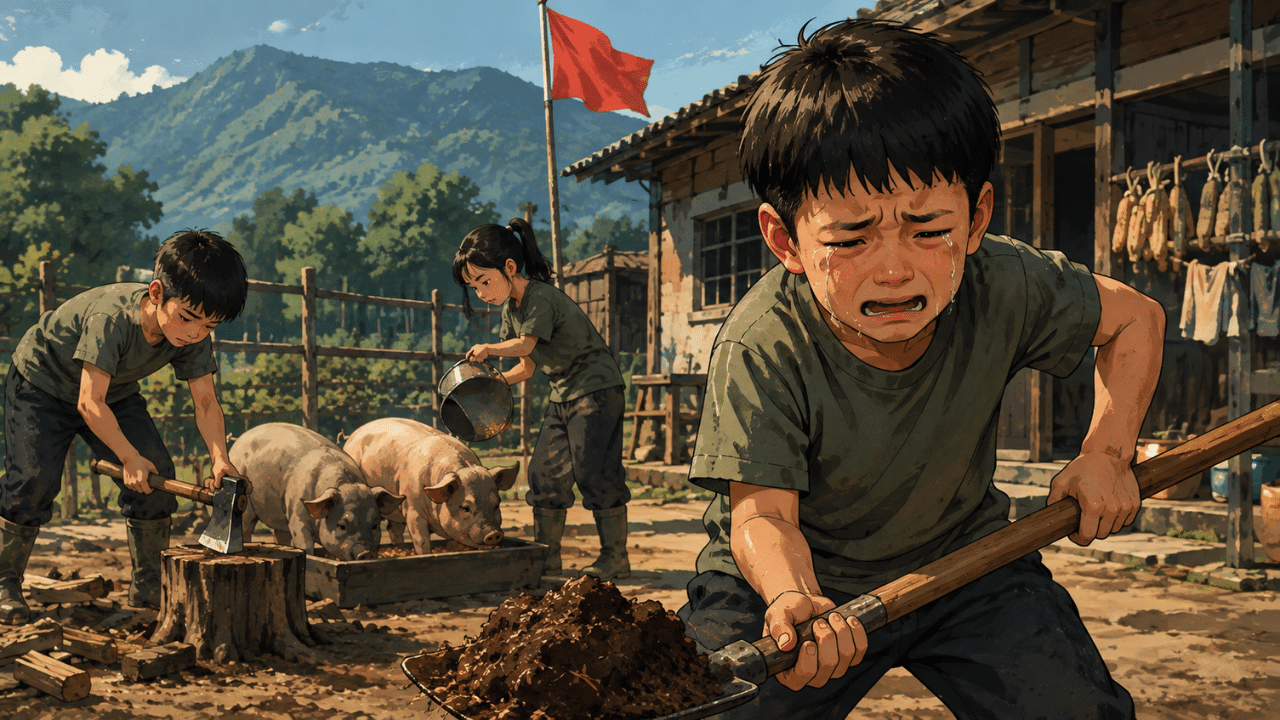
A growing number of urban Chinese parents are paying thousands of yuan to enroll their children in intense rural “hardship camps” to teach them resilience and hard labor.
Known as “chi ku” or “eat bitterness” camps, these programs subject city-raised children aged 6 to 16 to grueling agricultural chores. Activities range from cleaning dung from cowsheds and feeding pigs to gathering firewood and cooking their own meals on earthen stoves.
Set primarily in rural provinces such as Sichuan, Yunnan, and Guizhou, these programs run from ten days to nearly a month, costing between 5,000 and 10,000 yuan ($700 to $1,400 USD).
Organizers confiscate mobile phones at entry, strictly enforcing rules that penalize incomplete tasks with reduced meals, such as plain potatoes. While social media videos show tears and pleas from homesick children, many parents embrace the trend, believing modern comforts have made the younger generation “soft”.
Organizers emphasize that while the camps foster self-reliance, they serve as character-building experiences rather than permanent behavioral fixes.