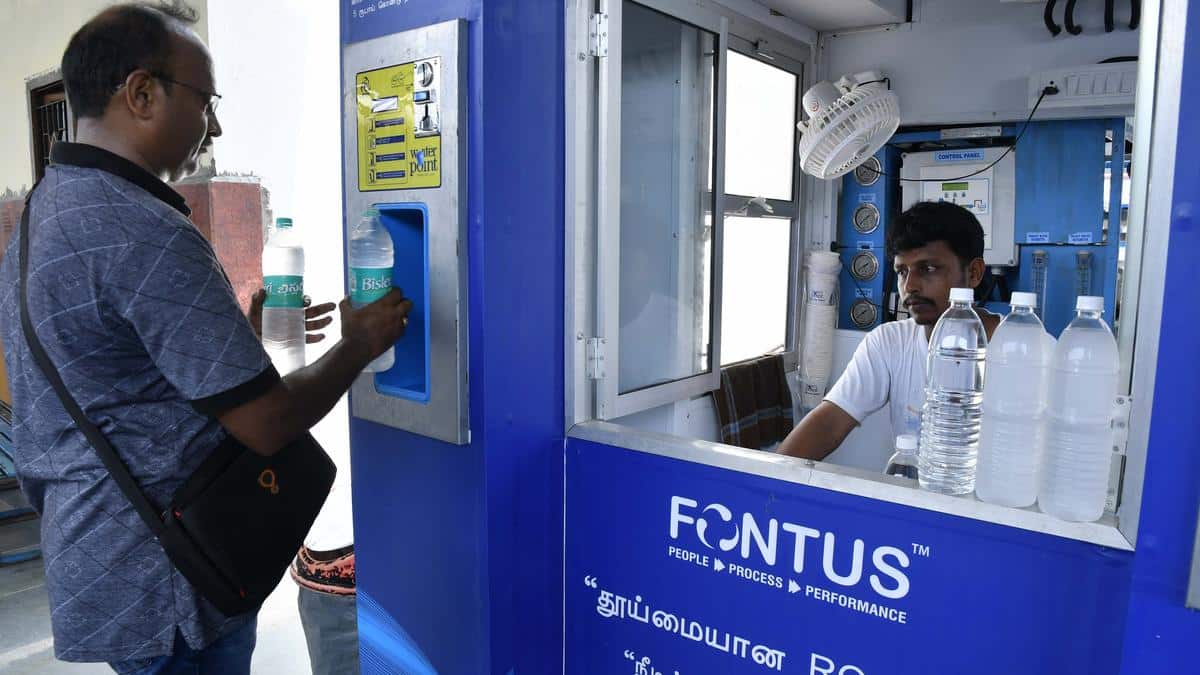
A Comptroller and Auditor General of India (CAG) audit has flagged serious gaps in basic passenger facilities at railway stations across the country, including the presence of E. coli and other coliform bacteria in drinking water samples.
The audit examined passenger amenities at 512 non-suburban railway stations across different railway zones. According to the report, water samples collected from taps and water facilities at several stations tested positive for total coliform bacteria, including E. coli.
The affected stations included locations in Southern Railway, South Central Railway, Central Railway and Eastern Railway.
E. coli found in drinking water samples
The CAG report said drinking water samples collected from platforms at 49 stations across eight railway zones during 2022-23 and 56 stations across nine zones during 2023-24 showed the presence of total coliform bacteria, including E. coli.
Stations specifically mentioned in the report included Coimbatore and Palakkad, Hyderabad, Chhatrapati Shivaji Maharaj Terminus, Bhiwandi Road, Kalyan and Lonavala, and Madhupur.
E. coli is commonly associated with faecal contamination and can cause illnesses including diarrhoea and other gastrointestinal infections. Some infections can lead to more serious complications.
458 of 512 stations lacked basic amenities
The audit found that 458 of the 512 stations, or nearly 90 per cent, were deficient in what the Railways classifies as Minimum Essential Amenities (MEA).
The Railway Board had issued instructions in April 2018 requiring stations to provide minimum essential facilities regardless of their category. The deadline for ensuring these amenities was August 31, 2018.
The prescribed basic facilities include:
- Drinking water
- Waiting halls
- Seating arrangements
- Platform shelters
- Urinals and toilets
- High-level platforms
- Fans
- Foot Over Bridges
- Dustbins
- Clocks
- Public address systems
Even major NSG-1 stations flagged
The CAG found deficiencies even at some of the country’s busiest Non-Suburban Group-1 (NSG-1) stations.
These included Mumbai Central, Chhatrapati Shivaji Maharaj Terminus, Howrah, Sealdah and New Delhi.
The audit flagged shortcomings involving seating, sanitary facilities, dustbins and electronic indicator boards, among other passenger amenities.
Indian Railways classifies major stations into NSG-1 to NSG-6 categories based on factors including their importance and passenger revenue. NSG-1 stations represent the highest category.
CAG recommends stricter water-quality checks
The audit recommended stronger monitoring of railway water-supply systems and regular testing of drinking water.
The CAG specifically called for compliance with prescribed inspection procedures and comprehensive testing of drinking water quality in line with the Uniform Drinking Water Quality Protocol.
The findings highlight concerns over the availability, cleanliness and monitoring of essential passenger facilities at railway stations, including some of the country’s busiest transport hubs.