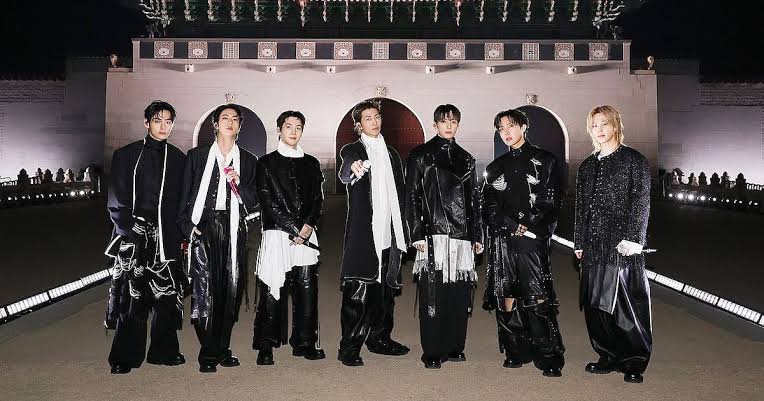
The globally celebrated K-pop group BTS delivered a groundbreaking performance at Gwanghwamun Square, blending tradition, innovation, and global pop culture in a landmark concert that has sparked widespread discussion on the evolving meaning of “Koreanness.”
Broadcast worldwide on Netflix, the Gwanghwamun concert marked a pivotal moment not only for BTS but also for the broader K-pop industry. The show showcased how modern music performances are evolving into immersive, multi-platform experiences that integrate live concerts, digital streaming, and merchandise ecosystems.
A Fusion of Tradition and Global Sound
The concert’s setlist bridged past and future, featuring reinterpretations of the traditional Korean folk song “Arirang” alongside global hits like Butter, Dynamite, and Mic Drop. Tracks from the group’s latest “Arirang” project demonstrated a shift toward globally accessible music structures, including English-language elements designed to reach wider audiences.
Despite criticism over reduced traditional elements, the performance incorporated strong cultural symbolism. Visuals included motifs inspired by the Korean flag and historical references such as the Silla-era Emille Bell, reinforcing a modern yet rooted cultural identity.
Emotional Authenticity on Stage
Beyond its technical precision, the concert stood out for its emotional depth. Member RM performed despite an injury, adapting choreography while seated, highlighting dedication and resilience. Meanwhile, J-Hope openly discussed anxiety, offering a rare moment of vulnerability that resonated with global audiences.
These unscripted moments added authenticity to an otherwise highly produced spectacle, reinforcing BTS’s connection with fans worldwide.
Redefining “Koreanness”
The Gwanghwamun concert challenges traditional notions of national identity. Instead of presenting Koreanness as fixed, BTS portrays it as dynamic, inclusive, and globally connected. The group blends language hybridity, internet culture, and historical symbolism to reflect South Korea’s transformation into a modern digital powerhouse.
This approach aligns with industry trends emphasizing accessibility and cross-cultural engagement, rather than limiting expression to traditional frameworks.
A New Economic Model for K-pop
The concert also highlighted a major shift in the K-pop business model. Entertainment company HYBE is increasingly focusing on experience-driven revenue streams, including live tours, merchandise, and digital content.
The upcoming “Arirang” world tour—spanning 82 shows across 34 cities—is projected to generate up to $1.8 billion in direct revenue. This reflects a broader industry move where physical albums function as collectible cultural products, while concerts and streaming drive primary engagement.
OTT Platforms Reshape Global Reach
By streaming the event globally, Netflix demonstrated the growing role of OTT platforms in K-pop’s expansion. This shift signals a transition from YouTube-driven virality to subscription-based global distribution, enabling artists to reach audiences across more than 190 countries simultaneously.
Industry Impact
The Gwanghwamun concert represents a turning point for K-pop, where music, culture, and commerce converge into a unified ecosystem. BTS has moved beyond being a music group to becoming a global cultural force, shaping how identity, entertainment, and business intersect in the digital age.