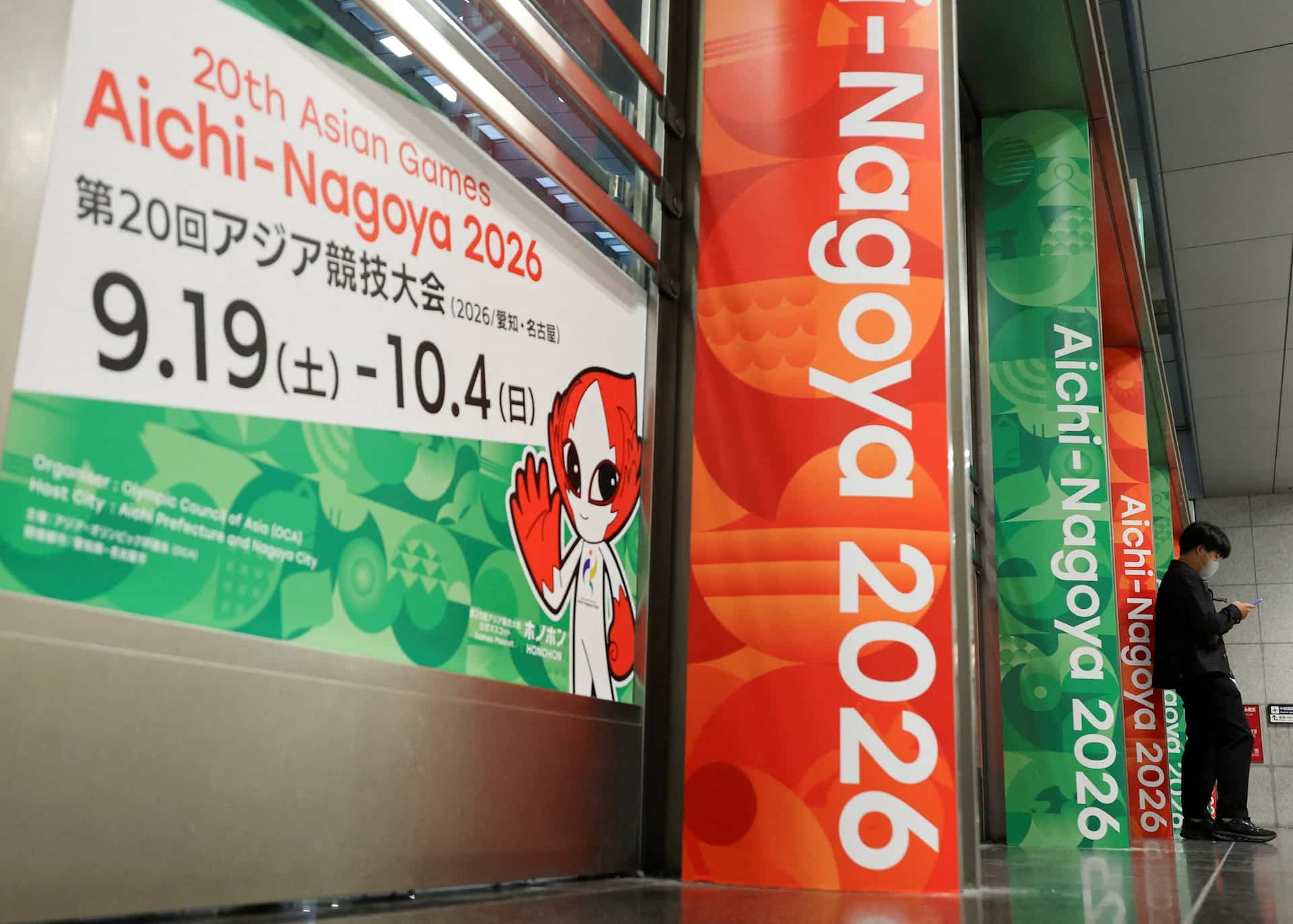
The Nagoya-Aichi Asian Games 2026 are facing an unexpected accommodation challenge ahead of the September 19 opening, with organisers struggling to house a larger-than-planned contingent of athletes and officials.
The Games were initially planned for around 15,000 athletes and officials. However, the number has reportedly increased to approximately 17,000, including around 11,000 athletes and 6,000 officials, following the addition of sports such as teqball and padel.
Organisers tell late additions to make their own arrangements
Organising committee president Hideki Omura said the host agreement had been based on a delegation size of 15,000 and that no additional budget had been allocated to accommodate the increase.
“There is simply nowhere for them to stay,” Omura said, adding that participants who still wanted to attend would have to make their own accommodation arrangements.
Nagoya mayor Ichiro Hirosawa has also acknowledged the challenge, with organisers operating under tight budget constraints.
No traditional Games village
Unlike the Olympics, the Asian Games will not have a conventional athletes’ village. Organisers are instead relying on a combination of hotels, a cruise ship and temporary accommodation.
Around 4,000 to 5,000 athletes are expected to stay aboard an Italian cruise ship docked in the area, while another 2,000 participants will reportedly be housed in temporary, container-style facilities.
Other athletes and officials will stay in hotels. Some competitions will also take place outside Nagoya, with swimming, diving and equestrian events scheduled in Tokyo.
Cricket teams face separate concerns
The accommodation crunch comes as cricket teams are reportedly raising concerns about facilities at the venue.
India and Pakistan are among the teams preparing to compete at Korogi Sports Park, a remodelled baseball facility being used for the Asian Games cricket competition.
The venue still has a pitcher’s mound, while the cricket pitch was laid relatively recently and has had limited competitive use.
The accommodation difficulties and venue concerns add to the logistical challenges facing organisers as Japan prepares to host the continental sporting event from September 19 to October 4.