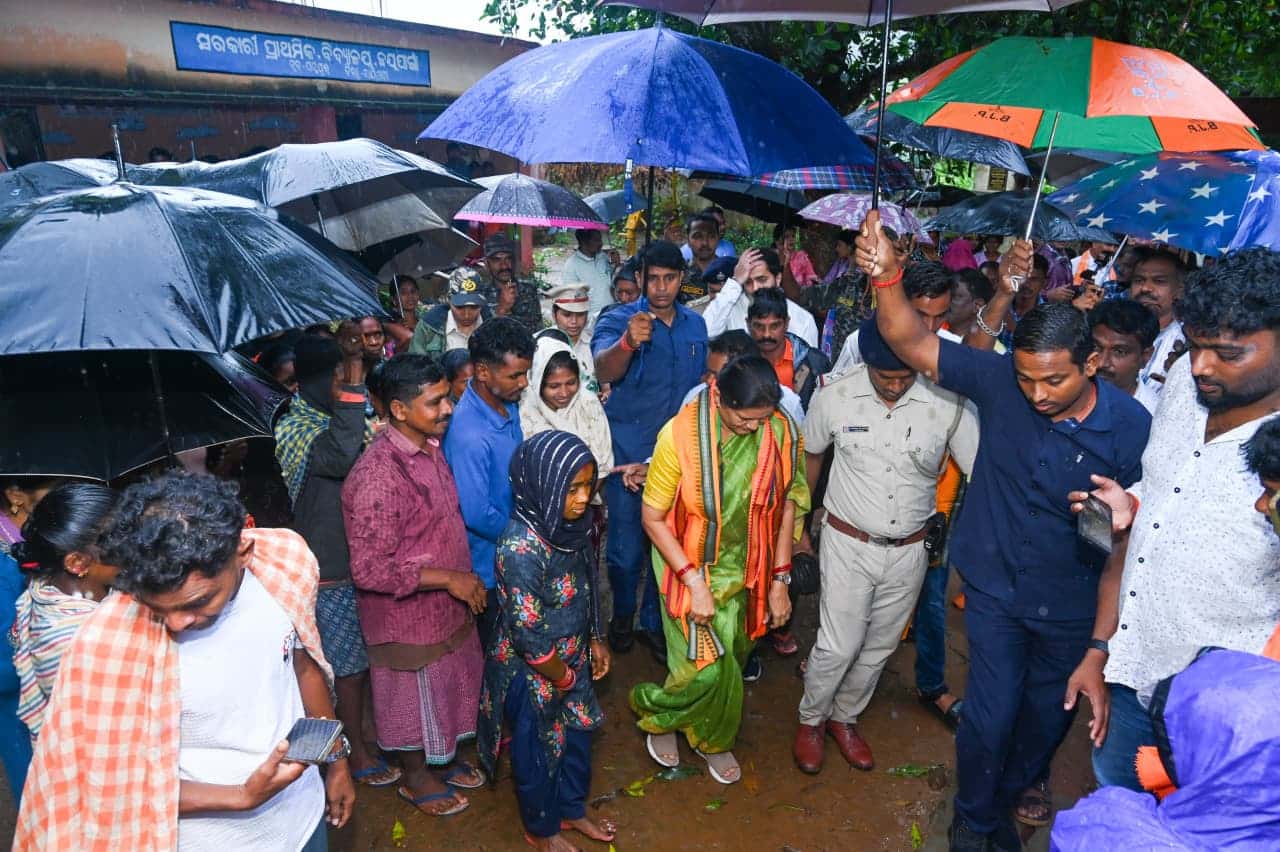
Even as the intensity of the cyclone wanes across the state, Odisha now faces a fresh and urgent challenge: the looming threat of flash floods caused by persistent post-cyclonic heavy rains and rising river water levels.
In response, the State Government has activated a full-scale emergency protocol. Senior ministers have been assigned direct oversight of eight key districts, with Deputy Chief Ministers and cabinet members taking charge on the ground to review relief, rescue, and rehabilitation operations.
High-Level Reviews in Koraput and Gajapati
In Koraput, Deputy Chief Minister KV Singh Deo monitored the situation directly from the district control room. Following the review, he personally visited cyclone shelters to inspect the arrangements for displaced residents and evaluate administrative readiness.
“The administration is maintaining a continuous 24/7 vigil across all 14 blocks of Koraput district. We are fully prepared to tackle any unforeseen situation, with a major focus on flash flood mitigation,” officials noted. District authorities confirmed that waterlogging in nearly 80% of urban areas has already been cleared.
Simultaneously, Minister Suryabanshi Suraj spearheaded emergency operations in Gajapati district. Reaching Paralakhemundi, he conducted high-level meetings with senior district officials before visiting vulnerable regions, including Gosani block. Minister Suraj personally inspected landslide-prone areas to raise awareness among residents and supervised relocation efforts to safe shelters.
Priority action items in Gajapati include:
-
Clearing uprooted trees to restore road connectivity.
-
Restoring power supply in affected pockets.
-
Ensuring continuous distribution of cooked meals and safe drinking water at relief shelters.
State-Wide High Alert & Emergency Deployment
Other key leaders, including Deputy Chief Minister Pravati Parida and Ministers Ravi Narayan Naik, Bibhuti Bhushan Jena, Mukesh Mahaling, Krushna Chandra Patra, and Nityananda Gond, have been actively monitoring readiness in their assigned districts. High-level emergency meetings are being conducted continuously to keep track of changing weather patterns and rising water levels.
| Key Relief & Safety Measures Implemented |
| 24/7 River Surveillance: Water Resources Department monitoring embankment levels around the clock. |
| Team Deployment: ODRAF, NDRF, and Fire Services personnel deployed in high-risk zones. |
| Evacuation Preparedness: Low-lying communities being shifted to multi-purpose cyclone shelters. |
| Basic Amenities: Guaranteed cooked food, medicine, and drinking water at all active shelters. |
Government Advisory to the Public
The State Government has issued an urgent public advisory requesting citizens to remain cautious:
-
Avoid Unnecessary Travel: Stay indoors during heavy downpours.
-
Stay Clear of Danger Zones: Do not attempt to cross submerged roads, bridges, or swollen water channels.
-
Use Emergency Helplines: Dedicated government helpline numbers have been activated for immediate assistance.