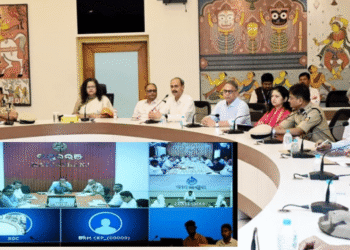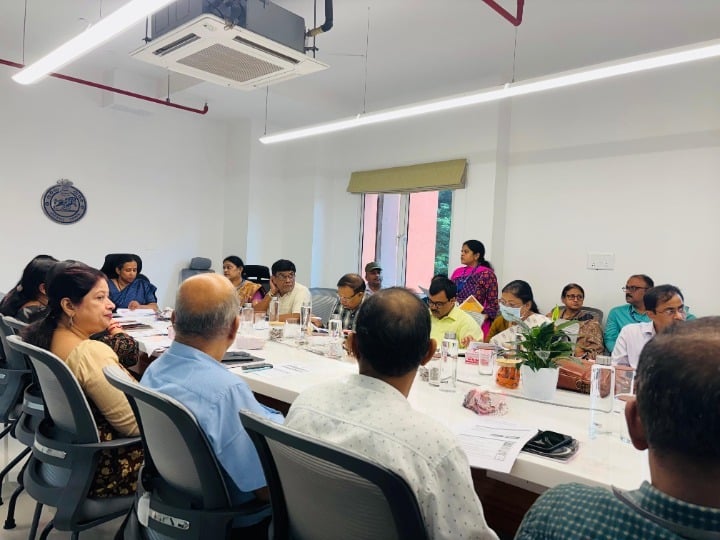
Odisha’s State Technical Task Force on malaria elimination and other vector-borne diseases met today at Kharavel Bhavan with a clear message: the fight is not over, and high-burden pockets need faster, tighter action.
The meeting was chaired by Aswathy S., Commissioner-cum-Secretary, Health and Family Welfare Department. Officials reviewed the current malaria situation, programme progress and field-level bottlenecks, and agreed that prevention, surveillance and rapid response must be strengthened together—not in silos.
Additional Director (Vector-Borne Diseases) Dr. Subhasish Mohanty presented a detailed picture of cases, district-wise trends and operational challenges. The discussion focused on districts still reporting higher caseloads and on the need for closer monitoring and quicker follow-up where transmission remains active.
Malkangiri first in line
Malkangiri received special attention because of its case load. A state-level team led by the Additional Director will visit the district and conduct block-wise field reviews. The team will assess the local situation, identify gaps in implementation, and prepare block-level action plans covering prevention, surveillance, diagnosis, treatment and rapid response. A detailed report will later be submitted to the Health Secretary.
One monitoring format for all partners
All partner organisations and agencies involved in malaria work have been told to use a single, state-approved monitoring format. Officials said this would bring uniformity to surveillance, reporting and follow-up across districts and reduce mixed signals in the field.
Special shield for tribal hostel students
The task force also flagged protection of students living in tribal residential schools, especially those in malaria-prone and border areas. Districts will be directed to strengthen preventive measures and ensure early diagnosis and timely treatment among students.
New technical group to design a sharper state plan
Given current challenges, a state-level technical group will be formed with experts from ICMR-RMRC Bhubaneswar, the office of the WHO Senior Regional Director, and state specialists. The group will review existing guidelines and programmes and draft a tailored state plan based on present disease patterns, implementation gaps, evidence-based measures and rapid response in the worst-affected areas.
The task force stressed that cutting cases and deaths—and speeding Odisha toward malaria elimination—will need close coordination between the Health Department and other allied departments. Mission Director, National Health Mission, Dr. Brunda D., senior Health Department officers and representatives of various departments attended the meeting.
The takeaway from Kharavel Bhavan was practical rather than rhetorical: map the remaining hotspots, close the gaps block by block, protect children in hostels, and keep every partner on the same reporting page.