

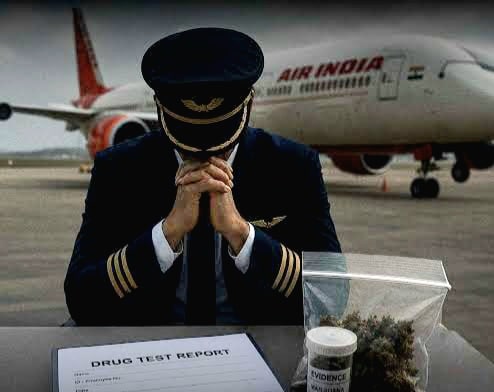
Air India has announced mandatory substance-abuse screening for all its pilots following the Phuket-Delhi flight incident in which the pilot-in-command tested positive for marijuana.
The airline said the expanded screening will begin August 13 and will cover all Group pilots. The decision comes days after flight AI2379, operating from Phuket to Delhi, suddenly lost altitude during its journey, leaving 24 people injured.
The incident took place on August 4, when the Airbus A320 aircraft reportedly dropped around 300 feet while cruising. Twenty passengers and four crew members suffered injuries.
Air India had initially attributed the incident to turbulence. However, the investigation subsequently drew attention to the pilot’s drug test, with the confirmatory test returning positive for cannabis.
Air India announces wider pilot screening
In an email to employees, Air India said it already complies with the substance-abuse testing requirements prescribed by the Directorate General of Civil Aviation (DGCA).
However, the airline said it had decided to go beyond the existing regulatory requirements to maintain the highest standards of safety and professionalism.
“We have decided to undertake a full screening of all Group pilots for any substances or medications that are not permitted under prevailing regulations,” the airline said.
The mandatory testing will begin on Thursday and will apply to pilots across the group.
Where will pilots be tested?
According to Air India, the screening will be conducted at multiple locations depending on pilots’ schedules and bases.
Testing will take place alongside training at the airline’s Gurugram Academy, after flights at Flight Briefing Centres or Air India offices, and at locations designated by individual bases.
The airline said the initiative was aimed at strengthening safety standards and reassuring passengers, employees and other stakeholders.
AI2379 incident under investigation
The Phuket-Delhi flight incident is being investigated by the Aircraft Accident Investigation Bureau (AAIB).
Reports have also indicated that the aircraft’s post-flight fault log recorded several warnings involving its hydraulic systems, flight controls and autopilot around the time of the altitude change.
The pilot’s initial drug screening was reportedly recorded as “non-negative”, prompting further testing. The subsequent confirmatory test was positive for cannabis.
The latest decision by Air India marks a significant expansion of its pilot screening measures, with the airline saying it wants to protect passenger confidence and maintain safety standards across its operations.