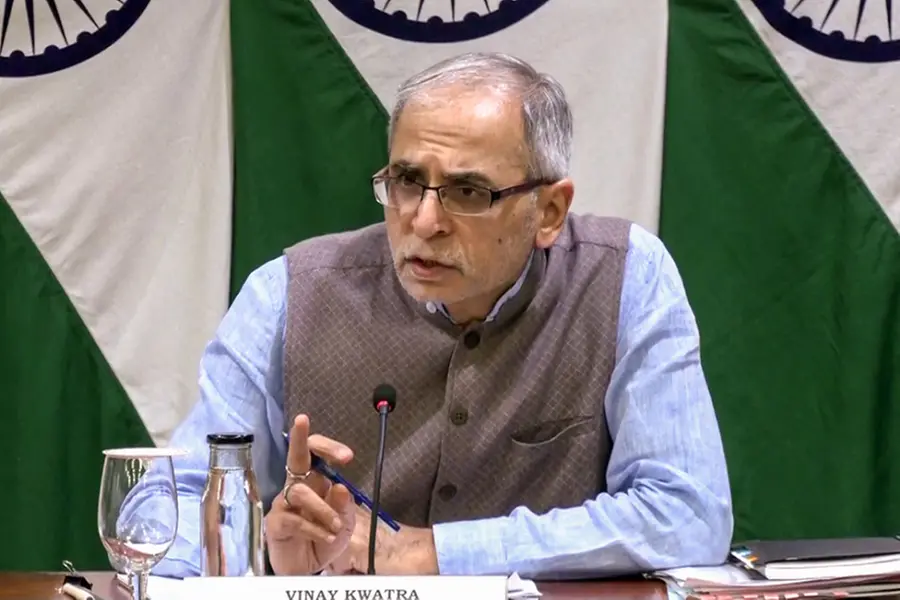
India’s ambassador to the United States, Vinay Mohan Kwatra, has sought to address concerns surrounding the Foreign Contribution (Regulation) Amendment Bill, 2026, saying the proposed changes are aimed at improving transparency, governance and clarity in foreign funding rules.
In a series of posts on X, Kwatra addressed five claims surrounding the proposed FCRA Bill 2026. He said the legislation does not seek to stop lawful foreign donations to civil society organisations and applies uniformly to organisations regardless of religion or community.
What did Vinay Mohan Kwatra say about the FCRA Bill?
Kwatra said regulating foreign financial flows is a sovereign function linked to governance and national security.
He also highlighted the history of the FCRA framework. The first FCRA was introduced in 1976 and replaced by a new framework in 2010. Amendments followed in 2016, 2018 and 2020.
According to Kwatra, the proposed 2026 legislation is the next step towards “more transparency, better governance and clearer rules.”
He said thousands of organisations registered under the FCRA continue to receive foreign contributions for areas such as healthcare, education, disaster relief, research and humanitarian work.
Will the FCRA Bill restrict NGOs?
Addressing concerns that the proposed law could make it harder for NGOs and charitable organisations to operate, Kwatra pointed to the rise in foreign contributions received by registered organisations.
He said foreign contributions increased from around $1.2 billion in 2010-11 to $2.67 billion in 2024-25.
Kwatra also said that India has more than three million NGOs, while only about 14,450 organisations hold FCRA registration.
He explained that the law requires organisations receiving foreign contributions to register, follow the prescribed process for receiving funds and report how the money is used.
What happens to NGO assets under the proposed law?
One of the major concerns surrounding the FCRA Bill relates to the treatment of assets when an organisation’s registration is cancelled, surrendered or not renewed.
Kwatra said the proposed legislation would create a Designated Authority to safeguard assets created from foreign contributions.
He added that organisations could regain their assets and unused funds if their FCRA registration is restored.
He also addressed concerns involving places of worship. According to his explanation, where a cancelled association has created property connected with a place of worship, the property would be transferred to another FCRA-registered organisation of the same faith to maintain continuity of worship.
Does the FCRA Bill target any particular religion?
Kwatra rejected the claim that the proposed law specifically targets a particular religion or community.
He said the FCRA applies uniformly to organisations regardless of their religion, community or ideology.
According to his explanation, faith-based welfare activities, including religious education, maintenance of places of worship and charitable work, remain eligible for foreign funding if the organisations meet the applicable requirements.
Is India the only country regulating foreign funding?
Kwatra also rejected the suggestion that India would be an outlier in regulating foreign financial flows.
He cited regulatory frameworks in several countries, including the US, Australia, Canada and the UK.
He pointed to the US Foreign Agents Registration Act (FARA), enacted in 1938, and FATCA, introduced in 2010. He also referred to legislation introduced in Australia in 2018, Canada in 2024 and the UK’s scheme that came into force in July 2025.
Why has the FCRA Bill 2026 sparked controversy?
The Foreign Contribution (Regulation) Amendment Bill, 2026 was introduced in the Lok Sabha on March 25, 2026. The proposed legislation seeks to regulate foreign contributions received by NGOs, trusts and associations.
A key proposal is the creation of a Designated Authority to manage assets funded through foreign contributions when an organisation’s FCRA registration is cancelled, surrendered or not renewed.
Opposition parties and critics have raised concerns about the potential impact of the proposed provisions on organisations and their assets. Some have also alleged that the legislation could disproportionately affect minority-run institutions.
US criticism of the proposed FCRA changes
Kwatra’s comments came amid criticism from some quarters in the United States.
US Congressman Riley Moore had expressed concern over the proposed changes, alleging that they could affect churches and religious charities in India.
The Ministry of External Affairs, however, said legislative matters concerning India are an internal matter for Parliament to decide.
MEA spokesperson Randhir Jaiswal also pointed out that several countries, including the US, regulate the flow of foreign funds.
The debate over the FCRA Bill 2026 is therefore likely to continue as Parliament considers the proposed changes and stakeholders examine their possible impact on NGOs, charitable organisations and foreign-funded activities in India.