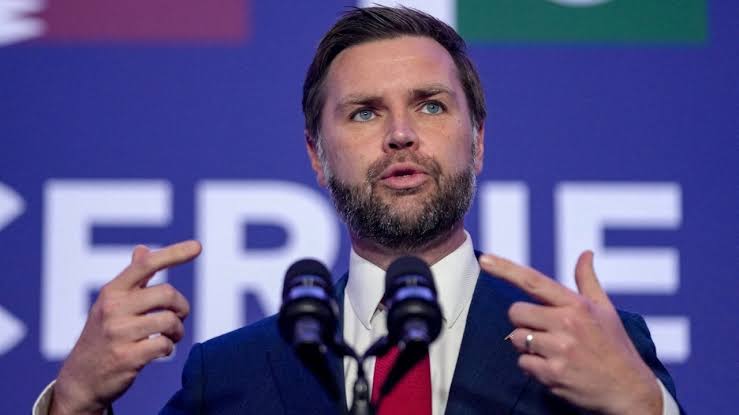
US Vice President JD Vance has said Iran told Washington that it has no plans to impose a toll on ships passing through the Strait of Hormuz. However, Vance stressed that the US will judge Tehran by its actions rather than its assurances as negotiations continue over reopening the strategic waterway.
The comments come amid efforts to establish a safe passage for commercial vessels through the Strait of Hormuz, a crucial global energy route. Around 20% of the world’s oil supply passes through the narrow waterway.
JD Vance outlines US position on Strait of Hormuz
Speaking to Fox News, Vance said the US expects oil and gas shipments through the Gulf to return to levels seen before the conflict.
“Our expectation is you’re going to see the same amount of oil and gas come out of the Gulf that you saw before the conflict started,” Vance said.
He added that Iran had told the US it did not intend to charge a toll for using the Strait of Hormuz. However, Vance said Washington would verify Iran’s actions rather than rely solely on its statements.
The US is also seeking assurances that commercial vessels will not come under attack while travelling through the waterway.
Safe shipping route remains key challenge
Vance said one of the major challenges is ensuring safe navigation for ships. He pointed to the presence of mines that Iran is alleged to have placed in the region during the conflict.
According to Vance, demining will be an important part of establishing a safe traffic system through the Strait of Hormuz.
The comments highlight the difficulties facing negotiations even as both sides indicate that progress may have been made in recent days.
Iran lists conditions for reopening Strait of Hormuz
Iran’s Supreme National Security Council has set several conditions for reopening the Strait of Hormuz.
Tehran has demanded that the US end what it described as threatening behaviour and provide assurances that there will be no further threats. Iran has also called for a permanent end to the conflict, the lifting of the US naval blockade on Iranian ports and the withdrawal of American military forces from the region.
Iran has further demanded compensation for war-related damage, the lifting of sanctions and the unconditional release of frozen Iranian assets.
These demands remain a major obstacle to reaching an agreement with Washington.
UAE reports attack on commercial tanker
The situation became more tense after the United Arab Emirates said an oil tanker belonging to state-owned Abu Dhabi National Oil Company was targeted while travelling through the Strait of Hormuz.
The incident has increased concerns over the safety of commercial shipping in the region.
Vance said Washington wants a clear commitment from Iran that commercial vessels will not be targeted.
Iran says Hormuz deal with Oman is close
Iran has separately said that it is close to reaching an agreement with Oman over navigation and management of the Strait of Hormuz.
However, Tehran has stressed that such an agreement alone would not automatically lead to the reopening of the waterway. Iran’s broader conditions for ending the restrictions remain in place.
The Strait of Hormuz has become a key focus of diplomatic efforts to de-escalate the US-Iran conflict. Any agreement that restores safe commercial shipping through the waterway could have major implications for global energy markets and international trade.