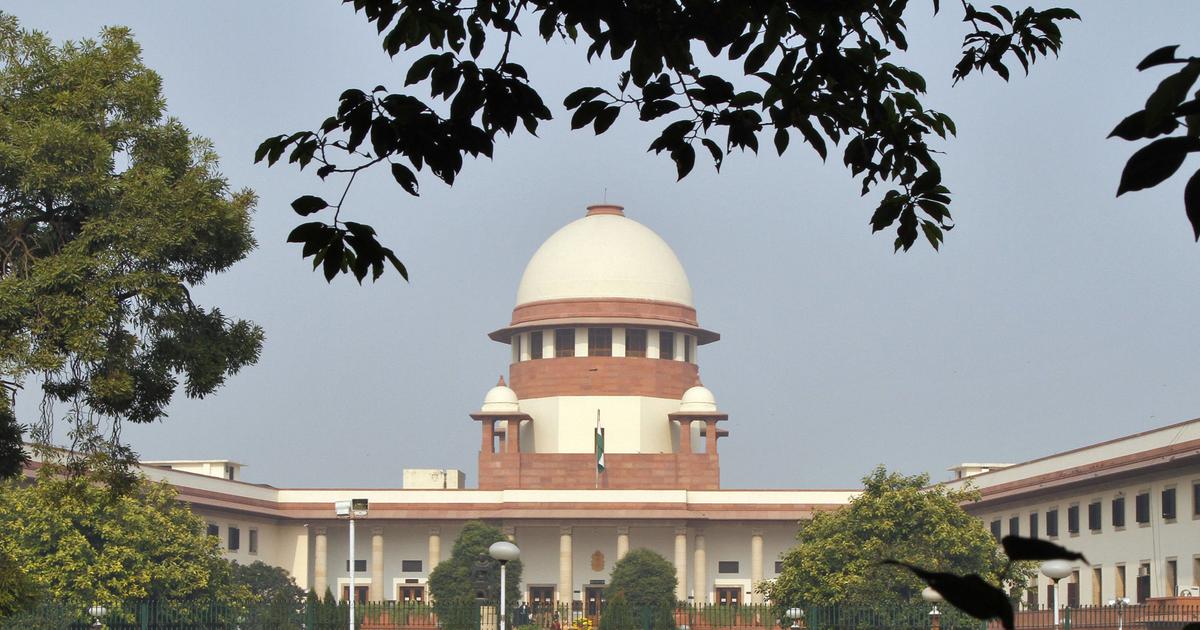
The Union government has informed the Supreme Court that the creamy layer principle cannot be extended to the Scheduled Castes (SC) and Scheduled Tribes (ST), maintaining that India’s reservation policy is rooted in historical and social discrimination, not economic status alone.
The Centre made the submission while opposing a petition seeking an income-based sub-quota within reserved categories, arguing that any major change to the reservation framework requires comprehensive policy review and legislative consideration.
Reservation Based on Historical and Social Backwardness
In its affidavit before the apex court, the Centre said reservation for SC and ST communities is based on constitutional recognition of historical injustice, caste-based discrimination, tribal identity, and social backwardness, rather than solely on financial conditions.
The government stressed that the creamy layer doctrine has consistently been applied only to the Other Backward Classes (OBCs) and has never been extended to the SC and ST categories.
According to the affidavit, introducing income-based preferences within reserved categories would require a holistic review backed by detailed socio-economic and empirical data on beneficiaries.
Parliament Must Decide Any Policy Change
The Centre further submitted that only Parliament has the authority to decide whether the creamy layer principle should be extended to SC and ST communities.
Referring to a reply filed by the Ministry of Social Justice and Empowerment on June 15, 2026, the government reiterated that such a policy decision falls within the legislative domain and should not be introduced through judicial intervention.
It also urged the Supreme Court to refrain from issuing directions that would effectively redesign India’s reservation policy.
What Is the Creamy Layer Concept?
The creamy layer refers to the relatively affluent and socially advanced members of the Other Backward Classes (OBCs) who are excluded from reservation benefits.
Currently, families with an annual income above ₹8 lakh (excluding agricultural income under existing norms) generally fall within the creamy layer and are not eligible for OBC reservation benefits.
The concept was first recommended by the Sattanathan Commission in 1971 and later reinforced by the Justice Ram Nandan Committee in 1993. It was subsequently incorporated into the implementation of OBC reservations.
Why SC/ST Categories Are Treated Differently
Unlike OBC reservations, SC and ST reservations have no creamy layer exclusion. Individuals belonging to these communities remain eligible for reservation benefits regardless of family income because the constitutional basis for these reservations is linked to systemic social discrimination rather than economic disadvantage.
The Centre noted that the constitutional framework governing the identification of Scheduled Castes under Article 341, Scheduled Tribes under Article 342, and Socially and Educationally Backward Classes under Article 342A does not permit changes based solely on economic criteria.
Background of the Case
The issue gained renewed attention after the Supreme Court, in August 2024, observed that states should identify and exclude the creamy layer within SC and ST categories while implementing reservations.
Responding to the ongoing legal challenge, the Union government has maintained that the principle applicable to OBC reservations cannot automatically be extended to SC and ST communities because the constitutional objectives and the nature of discrimination faced by these groups are fundamentally different.