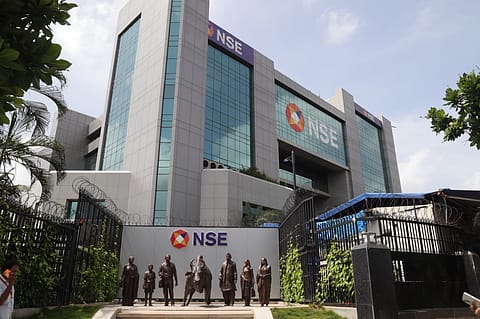
The National Stock Exchange (NSE) has taken a major step toward its long-awaited stock market debut by filing its Draft Red Herring Prospectus (DRHP) with the Securities and Exchange Board of India (Sebi).
The proposed share sale could become the largest Initial Public Offering (IPO) in Indian history, with an estimated size of nearly ₹30,000 crore.
If launched at current indicative market valuations, the IPO is expected to surpass previous record-holders, including LIC and Hyundai Motor India.
NSE IPO to Be an Offer for Sale
According to the filing, the IPO will consist entirely of an Offer for Sale (OFS) of up to 149 million equity shares by existing shareholders. The transaction represents nearly 6 percent of NSE’s paid-up capital.
As no fresh shares will be issued, the proceeds from the IPO will go directly to the selling shareholders rather than the exchange itself.
Major Shareholders Selling Stakes
Several institutional investors plan to partially divest their holdings through the IPO.
Among the key sellers are:
- State Bank of India (SBI)
- Canada Pension Plan Investment Board (CPPIB)
- Morgan Stanley affiliates
- Temasek-backed Aranda Investments
- Bank of Baroda
- Stock Holding Corporation of India
- General Insurance Corporation of India (GIC Re)
- The New India Assurance Company
- National Insurance Company
- United India Insurance Company
SBI is expected to be the largest selling shareholder, offering nearly 24.75 million shares.
LIC Retains Its Stake
While several investors are reducing their holdings, Life Insurance Corporation of India (LIC), the largest shareholder in NSE with a 10.72 percent stake, has decided not to participate in the share sale.
Other notable investors, including Premji Invest and veteran investor Radhakishan Damani, are also retaining their stakes.
The decision reflects confidence in the exchange’s long-term growth prospects and market leadership.
NSE Valuation May Cross ₹5 Trillion
Based on current grey market estimates of around ₹2,000 per share, analysts expect the IPO to value NSE at more than ₹5 trillion.
The offer size could reach approximately ₹29,780 crore, making it India’s biggest-ever public offering.
For comparison:
- Hyundai Motor India IPO: ₹27,859 crore
- LIC IPO: ₹20,557 crore
Market experts caution that the final valuation and price band will be determined closer to the launch after consultations with merchant bankers and regulators.
NSE to List on BSE
Under Indian market regulations, a stock exchange cannot list on its own platform.
As a result, NSE shares will be listed on the Bombay Stock Exchange (BSE), its long-standing competitor.
Leading investment banks, including Kotak Mahindra Capital and Morgan Stanley India, are serving as book-running lead managers for the issue.
A Decade-Long Journey to Listing
NSE first initiated plans for an IPO in 2016. However, the process was delayed due to the co-location controversy and subsequent regulatory proceedings.
Earlier this year, the exchange reached a ₹1,300 crore settlement with Sebi and received regulatory clearance to move forward with its listing plans.
The fresh filing marks the beginning of a new chapter for India’s largest stock exchange and one of the country’s most influential financial institutions.
Why the IPO Matters
The NSE IPO is expected to attract strong interest from retail and institutional investors alike. Industry experts believe the listing will allow ordinary investors to own a stake in one of India’s most important market infrastructure institutions.
With India’s capital markets continuing to expand rapidly, the public listing of NSE could become one of the landmark events in the country’s financial history.