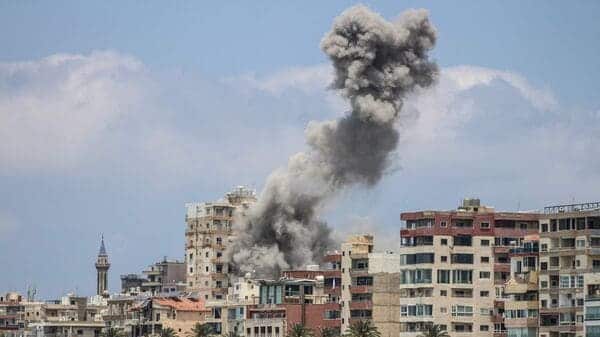
The United States launched a new round of military strikes on Iran on Tuesday, escalating tensions in the region after a US Apache attack helicopter was brought down near the Strait of Hormuz.
The operation was confirmed by the United States Central Command (CENTCOM), which described the action as a “proportional response” to what it called Iranian aggression.
According to CENTCOM, the strikes began at 5 p.m. ET following directions from US President Donald Trump.
Why Did the US Launch the Strikes?
The latest military action came a day after a US Army AH-64 Apache helicopter crashed during operations near the Strait of Hormuz.
A US official told Reuters that the helicopter was brought down by an Iranian one-way attack drone. President Trump later said the aircraft had been shot down while conducting patrol operations in the strategically important waterway.
The US military reported that both crew members were successfully rescued using a sea drone and are currently in stable condition.
Explosions Reported in Southern Iran
Iranian media outlets Mehr News Agency and Fars News Agency reported multiple explosions across Hormozgan province following the US operation.
Explosions were reported in:
- Bandar Abbas
- Sirik
- Minab
- Kouhestak
Authorities have not yet confirmed the exact targets or the extent of the damage.
The developments have renewed concerns about regional stability and the future of the fragile ceasefire between Washington and Tehran.
Iran Responds to US Claims
Iranian Foreign Minister Seyed Abbas Araghchi pushed back against US allegations, noting that the Strait of Hormuz lies close to Iranian territory.
He stated that foreign military forces operating near Iran face risks due to accidents, miscalculations, or crossfire situations. Araghchi added that reducing the presence of foreign forces would be the most effective way to lower tensions.
Meanwhile, Iran’s Deputy Foreign Minister Kazem Gharibabadi told Al Jazeera that the Apache helicopter was not intentionally targeted by Iran.
Ceasefire Under Pressure
The latest confrontation comes just days after Iran and Israel exchanged fire despite an existing ceasefire arrangement.
Analysts warn that the new US strikes could place additional pressure on diplomatic efforts aimed at preventing a broader regional conflict.
With both Washington and Tehran exchanging accusations, attention is now focused on whether further military escalation can be avoided in one of the world’s most strategically important regions.