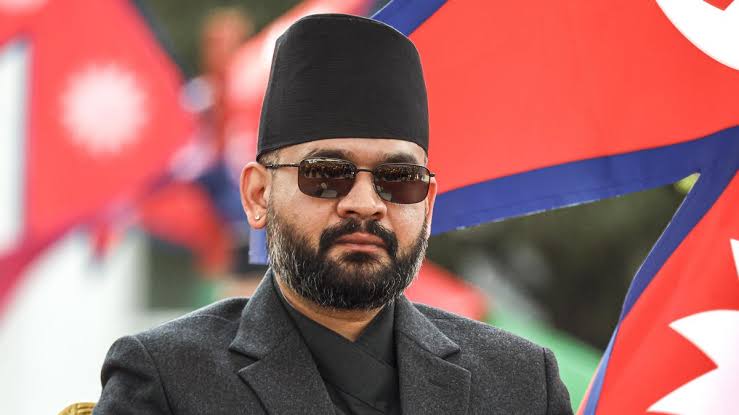
Nepal Prime Minister Balendra Shah has found himself at the centre of a political controversy after comments he made in Parliament regarding the long-running Lipulekh Pass dispute with India.
During his first appearance in the ongoing parliamentary session, Shah said the border issue should be resolved through diplomatic dialogue and factual assessment. However, his remarks that territorial encroachments were not one-sided quickly triggered criticism from opposition leaders and sections of the public.
Shah Calls for Diplomatic Resolution
Responding to lawmakers’ questions, Prime Minister Shah said his government has reached out to both China and the United Kingdom while exploring possible solutions to the dispute.
According to Shah, the historical roots of the disagreement date back to the British India era, making historical documentation and international consultation important components of the discussion.
He stressed that both India and Nepal should examine facts objectively and work together to resolve differences through friendly dialogue.
Remark Triggers Political Backlash
The controversy erupted after Shah stated that territorial encroachments were not limited to one side.
The statement drew immediate objections from opposition lawmakers, who demanded evidence supporting the claim. Several political leaders urged the prime minister to either substantiate his remarks or withdraw them from the parliamentary record.
Former foreign minister Pradip Gyawali was among those who reportedly sought clarification and an apology over the comments.
The issue also generated intense debate across social media platforms, with supporters and critics expressing sharply different views.
Foreign Ministry Issues Clarification
Following the backlash, Nepal’s Ministry of Foreign Affairs clarified that the prime minister’s remarks referred to encroachments occurring in certain “no-man’s land” areas and instances of cross-border occupation rather than official territorial claims by Nepal.
The clarification aimed to address concerns that the statement could be interpreted as an acknowledgment of formal Nepalese encroachment into Indian territory.
Understanding the Lipulekh Pass Dispute
Lipulekh Pass is a strategically important Himalayan route located near the India-Nepal-China tri-junction. The area has remained a source of disagreement between India and Nepal for decades.
The dispute intensified in 2020 when Nepal released a revised political map that included Lipulekh, Kalapani and Limpiyadhura within its territory.
Kathmandu maintains that the claim is based on the 1816 Sugauli Treaty signed between Nepal and British India. India, however, continues to maintain that the territories are an integral part of India and has rejected Nepal’s claims.
Impact on India-Nepal Relations
Although India and Nepal share close cultural, economic and people-to-people ties, the Lipulekh issue remains one of the most sensitive topics in bilateral relations.
Recent discussions surrounding the Kailash Mansarovar Yatra route through Lipulekh have once again brought the dispute into focus.
Political observers believe both countries will need sustained diplomatic engagement to prevent border disagreements from affecting broader cooperation in trade, connectivity and regional development.
What Happens Next?
With opposition parties demanding further clarification and public debate continuing, Prime Minister Shah’s remarks are likely to remain a significant political issue in Nepal.
Analysts say the controversy highlights the sensitivity of border matters in South Asian politics and the importance of carefully handling diplomatic disputes through dialogue and evidence-based discussions.