
In a significant milestone for women’s empowerment, the Odisha Legislative Assembly convened a special day-long session on April 30, 2026, to deliberate on the participation of women in Indian democracy. The session extended for nearly 14 hours, continuing from 11:00 AM until 12:45 AM.
The primary focus of the marathon deliberation was the implementation of the Nari Shakti Vandan Adhiniyam (Women’s Reservation Act, 2023), which guarantees a 33 percent reservation for women in the Lok Sabha and State Legislative Assemblies. After extensive debate spanning across party lines, the House successfully passed a resolution supporting the early implementation of the Act, aiming for its full enforcement by the 2029 general elections.
Political Deliberations and Exchange of Views
The extended session was marked by robust and often heated discussions, with members from the ruling Bharatiya Janata Party (BJP) and the opposition Biju Janata Dal (BJD) and Congress exchanging barbs over the history of women’s reservation and governance records.
The Ruling Party’s Perspective
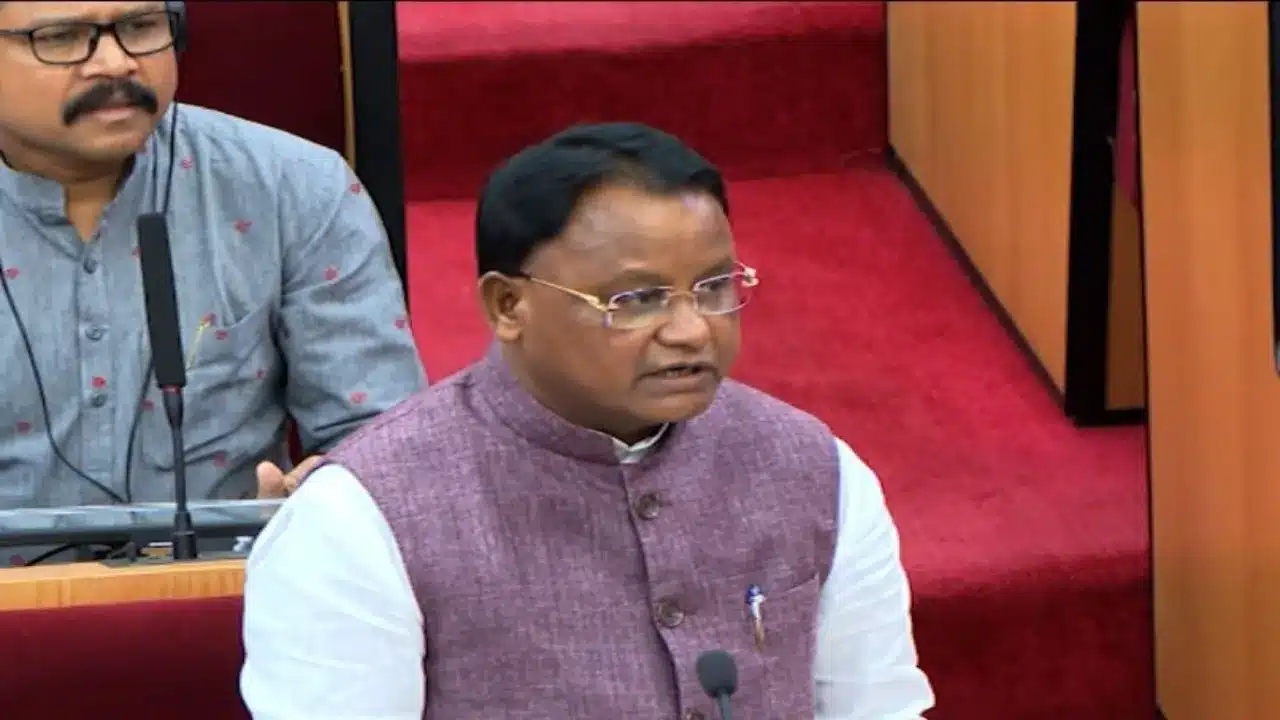
Chief Minister Mohan Charan Majhi championed the resolution, noting that women constitute nearly half of the state’s population but remain underrepresented in legislative bodies, with only 11 women members in the current Odisha Assembly. He credited Prime Minister Narendra Modi with successfully passing the landmark legislation. Majhi also pointed out that the government is focusing on comprehensive empowerment through state schemes such as the Subhadra Yojana, moving beyond financial assistance into actual political and socio-economic decision-making roles.
The Opposition’s Standpoint
The opposition BJD, led by Naveen Patnaik, argued that the BJD has historically been the true champion of women’s rights in Odisha, citing the late Biju Patnaik’s 33 percent reservation for women in local bodies, which was subsequently increased to 50 percent. While supporting the core principle of the Nari Shakti Vandan Act, the opposition criticized linking the Act to the upcoming delimitation process, which they claim acts to the disadvantage of states in eastern India.
Legislative Outcomes and Future Outlook
Despite the political sparring over Keonjhar-related law-and-order disruptions and past administrative records, the resolution was ultimately adopted. Lawmakers reached a consensus on the need to empower women at the grassroots level and integrate them more deeply into the policy-making framework of the nation.
With the passage of this resolution, Odisha has added substantial momentum to the nationwide demand to enforce the Women’s Reservation Act by the 2029 General Elections.