The severe aftermath of Cyclone ‘Arnab’ has plunged Odisha’s Ganjam district into a massive flood crisis, following relentless and unprecedented heavy rainfall over the past few days.
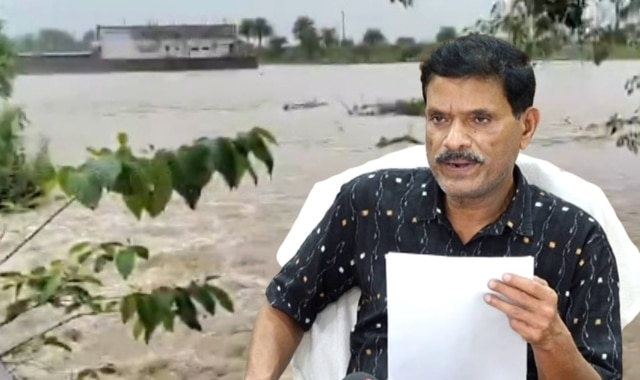
Addressing a special press conference at Secha Sadan, Engineer-in-Chief of the Water Resources Department, Dillip Kumar Raut, admitted that authorities had not anticipated such extreme downpours.
Patrapur block recorded the state’s highest rainfall at a staggering 546 mm within 24 hours. Other severely impacted areas include Sanakhemundi (388 mm), Sorada (375 mm), and Chikiti (309 mm). The torrential rains have caused the Rushikulya and Ghodahada rivers to swell dangerously, breaching danger marks and submerging vast tracts of agricultural land, roads, and residential areas. Approximately 300 villages remain surrounded by floodwaters, while around 2,000 people are stranded in marooned pockets.
Chief Secretary Anu Garg stated that the district administration has successfully shifted 6,170 people to 177 safe cyclone shelters, where free cooked meals are being continuously provided. State and national disaster response teams, including ODRAF and NDRF, are working round-the-clock on rescue missions. Authorities successfully rescued two individuals trapped inside an SUV submerged under seven feet of floodwater on the Sorada-Daringbadi road, alongside seven others stranded in Balarampur village.
While the Indian Coast Guard stands ready with helicopters for aerial rescue operations targeting roughly 120 stranded individuals, low cloud cover and persistent rain have caused unavoidable delays. Meanwhile, Ganjam District Collector V. Kirti Vasan and local officials are closely monitoring water levels at major reservoirs like Baghalati and Ghodahada, opening sluice gates to safely manage excess water outflow.
As a precautionary measure, the district administration has ordered the closure of all educational institutions—including Anganwadis, schools, colleges, and universities—across Ganjam until October 31. Authorities have strongly advised residents in low-lying areas and riverbanks to stay away from submerged routes and cooperate fully with relief and rescue personnel as operations continue.