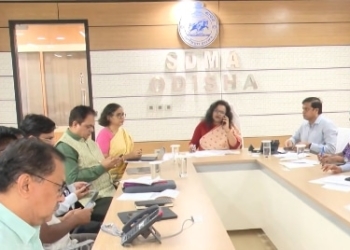
Incessant rainfall triggered by the remnants of Cyclone Arnab has plunged Odisha’s Gajapati district into a severe crisis, causing widespread flooding, major landslides, and total disruption of normal life.
District authorities have been placed on high alert as key rivers breach danger levels and the India Meteorological Department (IMD) forecasts continued heavy downpours across southern Odisha.
Bansadhara Crosses Danger Level; Paralakhemundi Threatened
The district’s major rivers—the Bansadhara and Mahendratanaya—are swelling rapidly due to heavy inflow from upper catchment areas.
- Bansadhara River: At Kashinagar, the Bansadhara River was recorded flowing at 55.60 metres, well above its established danger mark of 54.60 metres.
- Mahendratanaya River: Swelling waters have inundated Baghasala village under Gosani block, with floodwaters threatening low-lying residential areas in Paralakhemundi town.
- Gotta Barrage Impact: Authorities are closely monitoring discharge from the Gotta Barrage in neighboring Andhra Pradesh, where all 22 gates have been opened to release approximately 48,676 cusecs of water.
Gajapati recorded a staggering cumulative rainfall of 1,357 mm over the past 24 hours. Mohana block recorded the highest rainfall at 307 mm, followed by Rayagada (224 mm), R. Udayagiri (175 mm), Nuagada (173 mm), Gosani (151 mm), and Gumma (150 mm).
Landslides Cut Off Roads; ODRAF Teams Deployed
Relentless rains have also triggered hill collapses in Gajapati’s elevated regions. A massive landslide covered nearly 50 metres of the Kaipur-Gangabada main road with mud and heavy boulders, completely halting vehicular traffic and leaving commuters stranded.
To reinforce search, rescue, and relief operations, two additional Odisha Disaster Rapid Action Force (ODRAF) units from Koraput and Rayagada have been rushed to the district. This brings the total deployment to six ODRAF teams, strategically stationed across vulnerable blocks to assist in evacuations.