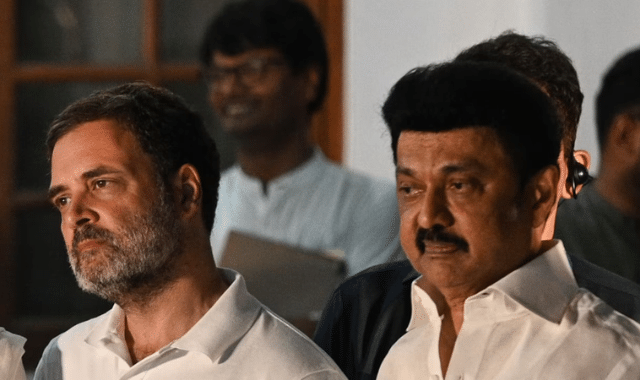
Two 18th-century historical figures from Tamil Nadu, Veerapandiya Kattabomman and Ettappan, have become central to the political debate over the Centre’s proposed delimitation legislation following a public exchange between Congress MP Rahul Gandhi and Dravida Munnetra Kazhagam (DMK) president MK Stalin.
Ahead of a scheduled Sunday meeting with Stalin in Chennai, Rahul Gandhi posted on X urging the DMK to join the Indian National Developmental Inclusive Alliance (INDIA) bloc in defeating the Constitution amendment bill, stating that “Brother Stalin has always stood like a rock against anti-Tamil forces”.
Previously, on August 3, Gandhi had remarked that anyone supporting the delimitation exercise was betraying Tamil Nadu and acting as a “21st-century Ettappan”.
Responding on X on Sunday—a day after the DMK announced its support for the bill—Stalin thanked Gandhi for acknowledging the DMK’s role in safeguarding the Constitution. Reiterating that every decision is made keeping Tamil Nadu’s interests foremost, Stalin stated that his party will not compromise and expressed confidence that “history will judge us as Kattabommans and not Ettappans”.
In Tamil history, Veerapandiya Kattabomman (born January 3, 1760) was the polygar (chieftain) of Panchalankurichi who resisted British East India Company rule after the British refused to recognise his authority. Captured by British forces, he was hanged at Kayathar on October 16, 1799, and his life was later immortalised in B.R. Panthulu’s 1959 Tamil film Veerapandiya Kattabomman, adapted from a play by Sakthi T.K. Krishnasamy.
Conversely, Ettappan Nayak, the ruler of Ettayapuram and a former confidante of Kattabomman, is remembered in Tamil popular history for allegedly disclosing Kattabomman’s whereabouts to the British, making “Ettappan” a colloquial Tamil term for a betrayer.
The DMK, which holds 22 Lok Sabha and eight Rajya Sabha MPs, had earlier opposed the initial delimitation proposal, with Stalin burning a copy of it in April. However, Stalin stated on Saturday that the party backed the revised bill because it met the DMK’s two core demands: ensuring no reduction in Tamil Nadu’s 7.18% Lok Sabha seat share and maintaining existing parliamentary representation proportions among states based on the 1971 Census.