Tensions in West Asia have escalated again after the United States launched strikes on 10 Iranian military targets, prompting Iran to respond with missile and drone attacks targeting US-linked military sites in Kuwait and Bahrain.
The latest military exchange comes despite an interim agreement between Washington and Tehran aimed at reducing hostilities and negotiating a broader peace framework.
US Launches Airstrikes After Merchant Ship Attack
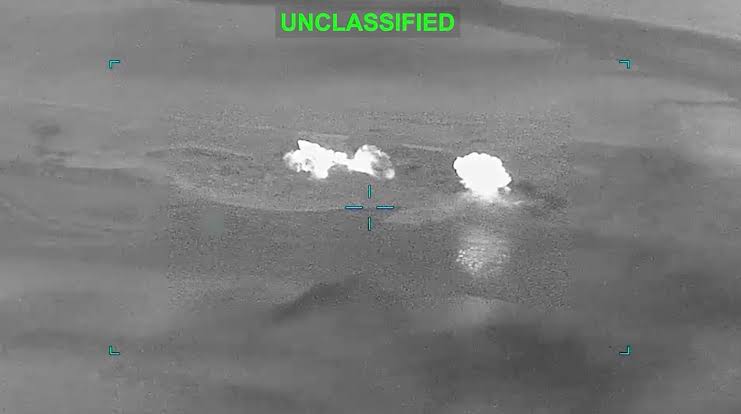
The US Central Command said American forces carried out precision strikes on 10 military targets in and around the Strait of Hormuz.
According to the US military, the operation targeted surveillance systems, communication infrastructure, air defence positions, drone storage facilities and minelayer capabilities.
US officials said the strikes were launched after a commercial oil tanker, identified as Kiku, was reportedly attacked while transiting the Strait of Hormuz.
The tanker was carrying more than two million barrels of crude oil at the time of the incident.
The US military stated that Iran had an opportunity to comply with the ceasefire arrangement but instead carried out the attack on the merchant vessel.
Officials added that commercial shipping through the Strait of Hormuz continues while US forces remain on alert.
Donald Trump Issues Strong Warning
US President Donald Trump defended the military operation, accusing Iran of violating the ceasefire agreement.
In a statement on Truth Social, Trump said American aircraft had struck Iranian missile, drone and coastal radar facilities in response to repeated violations.
He also warned that if further military action became necessary, the United States would respond with greater force.
Iran Announces Retaliatory Operation
Iran’s Islamic Revolutionary Guard Corps (IRGC) said it launched a joint missile and drone operation targeting US military facilities in Kuwait and Bahrain.
Iran claimed the attacks struck installations at Ali Al Salem Air Base in Kuwait and the Fifth Fleet naval facility in Bahrain.
Iranian military officials warned that any future military action against the country would receive what they described as a “crushing response.”
The IRGC also stated that the US military presence across the region would continue to face consequences if hostilities escalate further.
Strait of Hormuz Remains a Flashpoint
The Strait of Hormuz remains one of the world’s most strategically important shipping routes, carrying a significant share of global crude oil exports.
Recent attacks on commercial vessels have renewed concerns about maritime security and the possible impact on international energy markets.
Both Washington and Tehran continue to accuse each other of violating the interim agreement governing navigation and military activity in the region.
Peace Talks Continue Despite Escalation
Despite the latest military exchange, diplomatic negotiations have not been suspended.
Officials from both countries are continuing discussions on a broader agreement covering maritime security in the Strait of Hormuz, Iran’s nuclear programme and the future handling of enriched uranium stockpiles.
Under the interim framework, both sides have a 60-day period to negotiate a comprehensive agreement aimed at reducing regional tensions.
The latest developments highlight the fragile nature of the current ceasefire and underscore the challenges facing ongoing diplomatic efforts in West Asia.