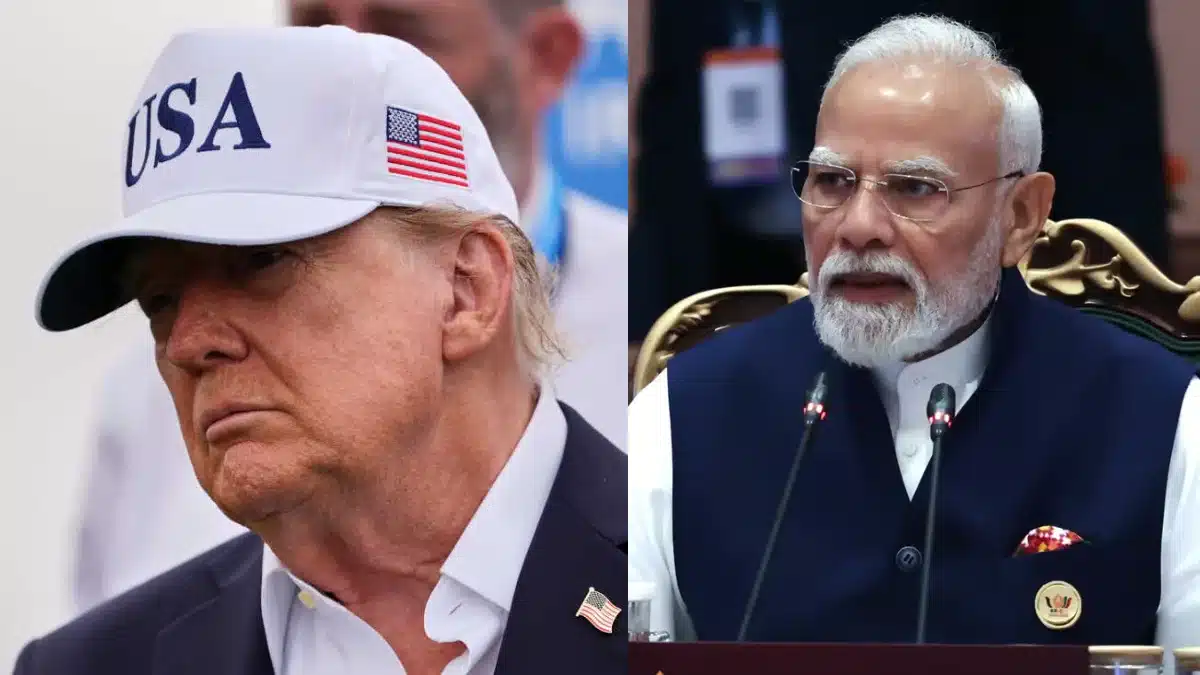
The United States has taken note of India’s warning that the newly enacted Lindsey O. Graham Sanctioning Russia and Iran Act of 2026 could affect bilateral ties, but a senior US State Department official said there were “no hard feelings” over New Delhi’s response.
The legislation gives US President Donald Trump the authority to impose tariffs of up to 100% on goods from countries that continue certain purchases of Russian energy. However, the law does not automatically impose such a tariff on India; the authority is discretionary and comes with a broad national-security waiver.
US says it understands India’s response
Reacting to India’s warning over the legislation, the senior US official said New Delhi had to respond to the measure, particularly after members of the US Congress publicly criticised India over its purchases of Russian energy.
The official said Washington understood that India, like the United States, has a domestic constituency to consider.
“There’s no sort of hard feelings” over such activity, the official said, according to the remarks reported from the State Department briefing.
The comments come after India’s Ministry of External Affairs warned that the legislation could have implications not only for the bilateral relationship but also for international energy markets.
What the Russia sanctions law means for India
The Lindsey O. Graham Sanctioning Russia and Iran Act of 2026 was signed into law by Trump on September 18 after clearing the US House and Senate.
The legislation expands US sanctions and gives the president additional authority to impose tariffs of up to 100% on countries that continue significant purchases of Russian oil and gas. India and China are among the major Russian energy buyers potentially covered by the provision.
Importantly, the law does not mean Indian goods automatically face a 100% tariff. Any such measure would require the Trump administration to exercise the authority granted by Congress and meet the conditions set out in the legislation.
Trump has broad waiver authority
The senior US official said the legislation provides Trump with a “broad national security waiver”, giving the administration flexibility in deciding how and whether to use the new powers.
The official described the legislation as another “tool” available to the president and said its existence did not necessarily mean that tariffs or other measures would be implemented immediately.
The official also indicated that the administration would assess how the law is applied in the coming days.
Jaishankar raises India’s concerns with Rubio
The issue was discussed earlier this week between External Affairs Minister S Jaishankar and US Secretary of State Marco Rubio on the sidelines of the 81st United Nations General Assembly in New York.
Jaishankar said he had reiterated India’s “interests and concerns” regarding the Sanctioning Russia and Iran Act. The two ministers also discussed the situations in the Gulf and Ukraine.
The US State Department said Rubio and Jaishankar also discussed possible sanctions against states engaging economically with Russia and Iran. Rubio emphasised that Washington remained positioned to help regional partners address their energy-security challenges.
India stresses energy security
India has maintained that it will take necessary steps to protect its trade and economic interests while ensuring energy security through diversified sourcing and evolving market conditions.
The MEA has said the potential implications of the US legislation for both bilateral relations and international energy markets have already been clearly communicated to American interlocutors.
Commerce and Industry Minister Piyush Goyal has also said India would study the details of the new US law before deciding on further action.
US seeks continued engagement with India
Despite the disagreement over the sanctions law, Washington has continued to emphasise the importance of its relationship with New Delhi.
The senior US official pointed to cooperation through the Quad and said Secretary Rubio is expected to visit India in October, which would be his second visit to the country this year.
The official also said Washington could help India diversify its energy sources, pointing to the US administration’s efforts to expand access to alternative supplies.
The developments come as India and the US continue negotiations on a bilateral trade agreement, adding another layer to discussions over tariffs, energy security and the wider strategic relationship.