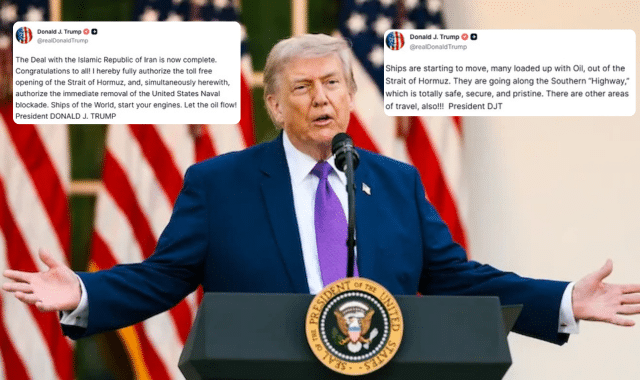
In a significant breakthrough for West Asia, U.S. President Donald Trump declared that ships have begun moving safely out of the Strait of Hormuz following a truce agreement with Iran.
The announcement comes just days before the formal signing of a peace deal scheduled for June 19, 2026, aimed at ending months of tension and reopening one of the world’s most critical maritime routes.
The Strait of Hormuz, a vital passage for global oil shipments, had been under a U.S. naval blockade since April 12 after failed ceasefire talks. Trump confirmed that the blockade has now been lifted, allowing vessels to resume passage without fear of confrontation. “Ships are starting to move out safely,” he said, underscoring the immediate impact of the agreement.
According to reports, the peace pact includes provisions for sanction relief, resumption of nuclear negotiations, lifting restrictions on Iranian ports, and commitments to end regional conflicts. The deal is expected to ease economic pressure on Iran while stabilising energy markets worldwide.
U.S. Vice President JD Vance emphasised that Washington expects Iran not to impose tolls on vessels transiting the strait, noting that technical negotiations are still underway. Analysts suggest that the agreement could mark a turning point in U.S.–Iran relations, though scepticism remains about long-term compliance.
The development has been welcomed by global markets, with oil prices showing signs of stabilisation. Regional observers believe the deal could reduce tensions across West Asia, though much will depend on how both sides implement the terms in the coming weeks.
For now, the sight of ships moving freely through Hormuz signals cautious optimism that one of the world’s most volatile flashpoints may finally see lasting peace.