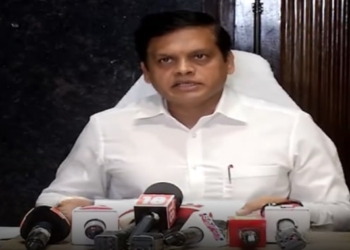
The Supreme Court of India has concluded its hearings on the high-profile legal battle surrounding the appointment of the Odisha Director General of Police (DGP) and has officially reserved its verdict.
However, the final judgment is expected to be pronounced only after the apex court hears a similar petition concerning Jharkhand on October 8.
During the final hearing, Solicitor General Tushar Mehta and Advocate General Pitambar Acharya defended the state government’s actions. The bench posed two critical questions to the state: Why was it necessary to create an ex-cadre post, and why did the state add extra names when three eligible cadre IPS officers had already been recommended by the UPSC, in adherence to the Prakash Singh guidelines?
Responding to the queries, the Solicitor General argued that the decision was made to ensure a larger pool of eligible candidates, maintaining that the state government followed both Ministry of Home Affairs (MHA) parameters and Prakash Singh guidelines. The Supreme Court’s core scrutiny centred on whether these transparency guidelines were strictly observed, and whether the UPSC properly reviewed and monitored the selection process.
The Background of the Dispute
As per standard protocol, state governments forward the names of eligible cadre IPS officers to the UPSC. The commission reviews the credentials and recommends a panel of three senior-most, qualified officers to the state for the DGP post.
In the current controversy, although the UPSC recommended three senior officers, the Odisha government chose not to select from that initial panel. Instead, it created an ex-cadre post and resubmitted a list of eight names back to the UPSC, triggering widespread legal and political debate. With arguments from all sides now concluded, all eyes are now set on the Supreme Court’s upcoming verdict following the October 8 Jharkhand hearing.